
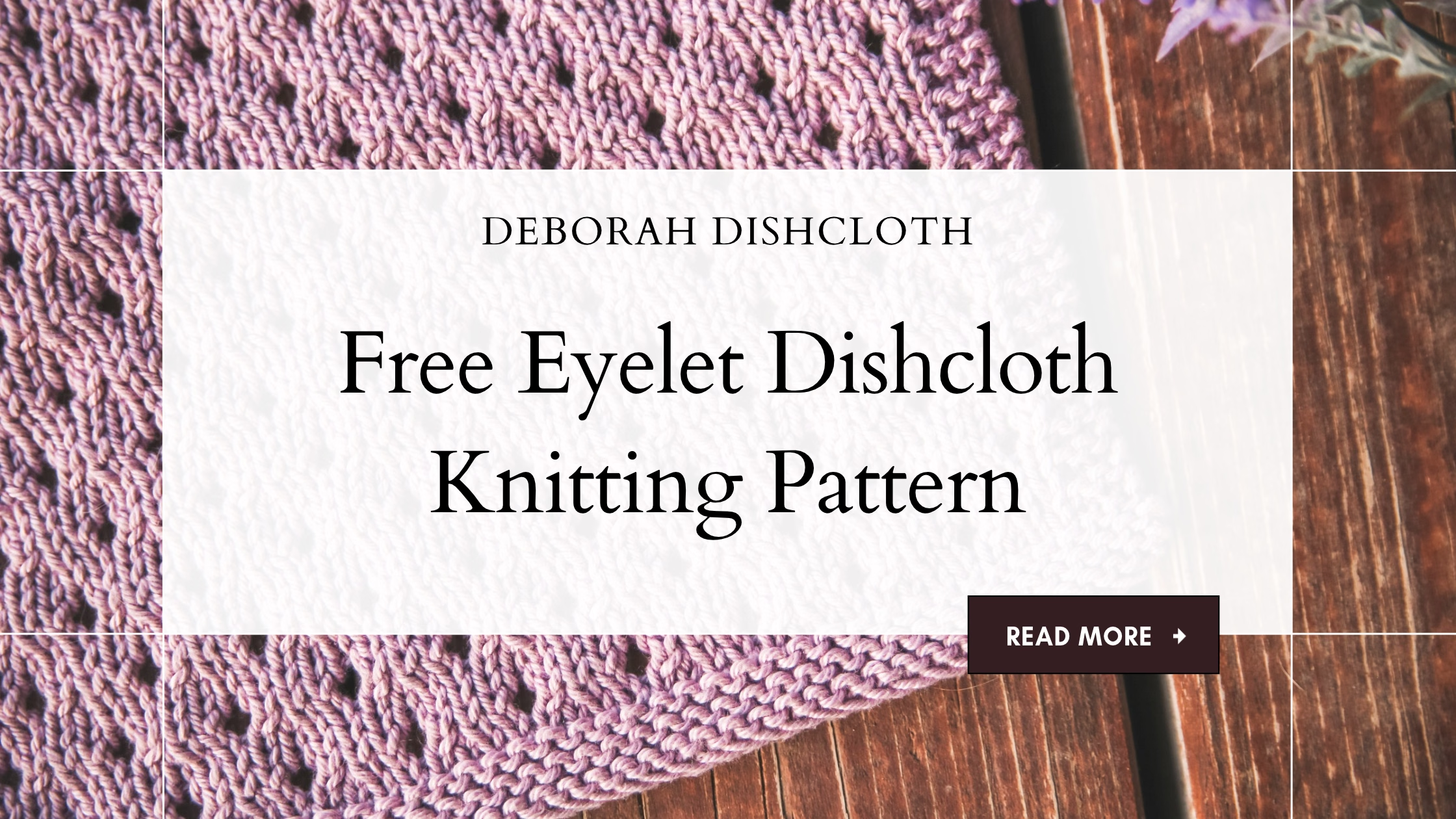
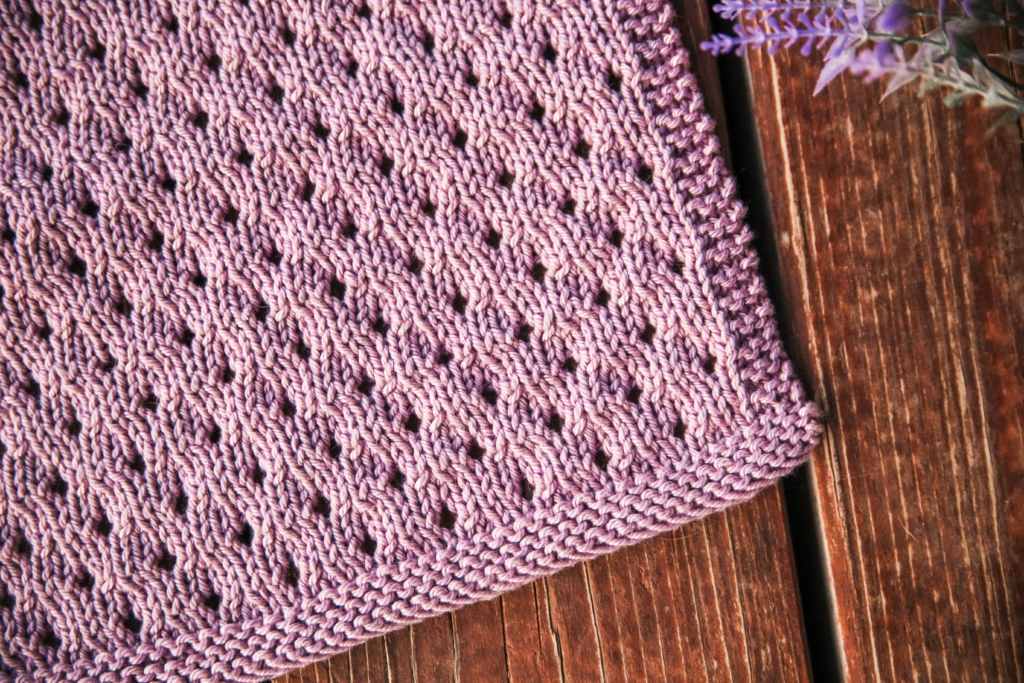
This eyelet dishcloth knitting pattern is the newest addition to my collection of free dishcloth knitting patterns, bringing a little lace detail to a useful everyday kitchen knit.
If you enjoy small projects but want something beyond a plain cloth, meet the Deborah Dishcloth! The eyelets give the fabric a pretty, open detail while keeping the project focused on something you can actually use. I used KnitPicks Dishie and US size 5 (3.75 mm) needles for this cotton eyelet dishcloth. It is a lovely choice when you want to spend some time with a stitch pattern without starting another large project.
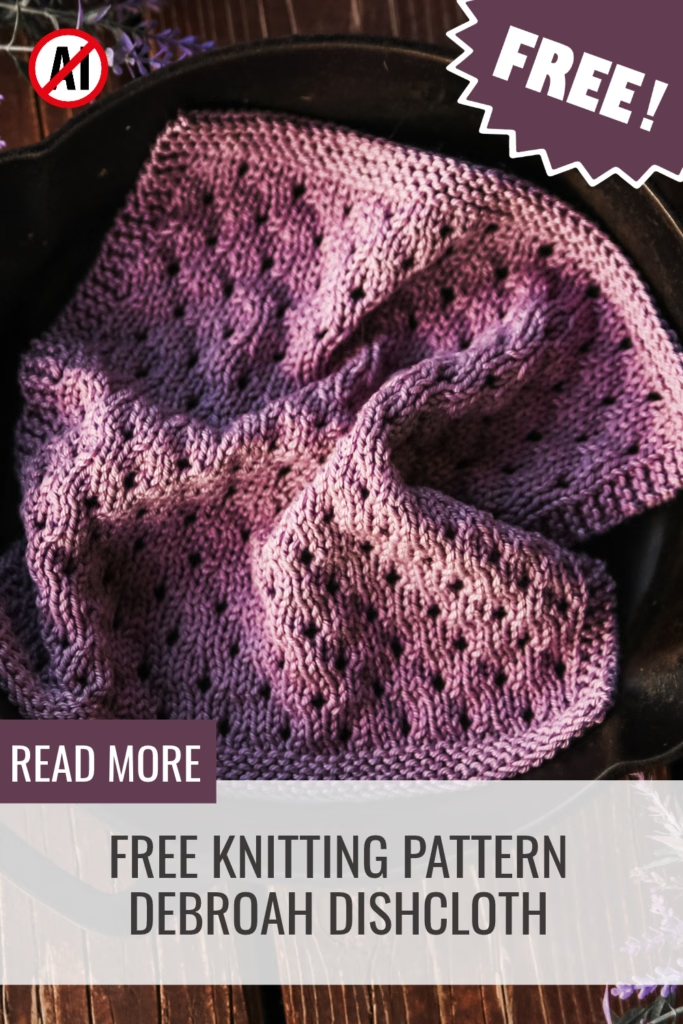
There is room for a little variety in the kitchen drawer. A dishcloth can be practical and still give you something interesting to watch develop on your needles.
The Deborah Dishcloth adds eyelet detail to that familiar small-project format. Knit one on its own, or pair it with a few different dishcloth designs for a handmade set with a mix of stitches.
What Materials Do You Need for This Eyelet Dishcloth Knitting Pattern?
For the Deborah Dishcloth, I used KnitPicks Dishie and US size 5 (3.75 mm) knitting needles. Have scissors and a yarn needle nearby for trimming the yarn and weaving in your ends when you finish.
Dishie is a practical cotton choice for a project that will spend time around water and go through regular washing. The stitch definition also suits a design where you want the eyelet detail to be visible.
If you are considering a different yarn, take a look at my Best Yarn for Dishcloths guide. Choosing yarn for a kitchen cloth means thinking about absorbency and care as well as how it looks on the needles.
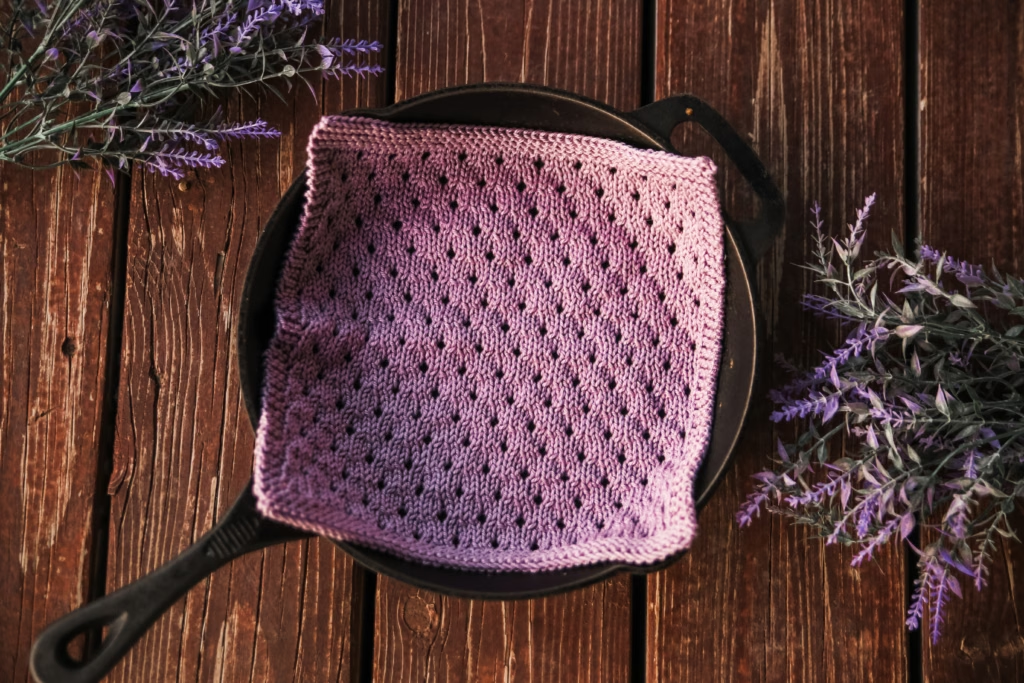
A solid or softly shaded color is a good starting point if you want the eyelets to stand out. Strong color changes can draw attention away from the stitch pattern, so consider which part of the finished cloth you want to notice first.
For a coordinated set, you could use the same color across several designs or choose a small group of colors that work together. Different stitches provide plenty of variety even when you keep the yarn palette simple.
How Do You Keep the Eyelet Pattern Neat as You Knit?
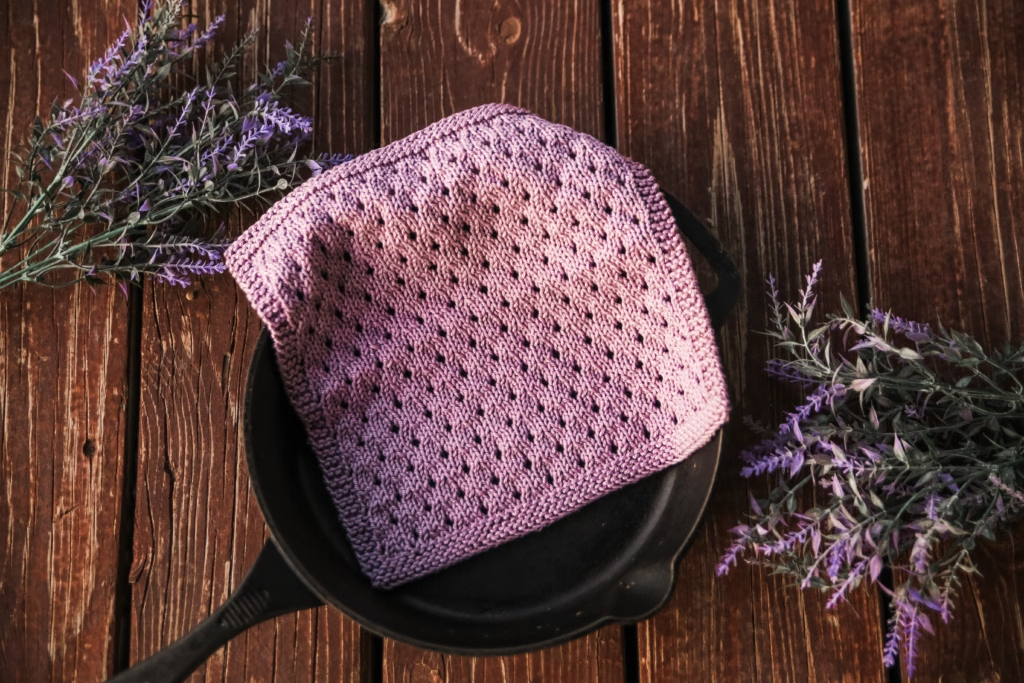
The eyelets are the detail that gives the Deborah Dishcloth its character. In eyelet knitting, yarn overs create openings, while the accompanying decreases help balance the added stitches according to the pattern.
As you work through the directions, pay attention to both parts of that combination. A missed yarn over or decrease can change your stitch count and affect how the next section lines up.
It helps to count your stitches after an eyelet row while you are getting familiar with the design. Checking a little at a time makes it easier to catch a mistake while it is still close to your needles.
Keep a note of your place in the instructions if you put the project down. Small projects are easy to pick up between other things, but remembering exactly which row you finished is another matter!
When the knitting is complete, weave in the ends securely and wash or block according to your yarn’s care instructions. Gently arrange the cloth into shape without stretching the eyelets wider than you want them in the finished fabric.
What Dishcloth Patterns Should You Knit Next?
If the Deborah Dishcloth has you ready to keep a cotton project on your needles, try one of these designs next:
- Roman Dishcloth: Seed stitch edges and textured bands offer a change of pace from eyelet knitting.
- Miriam Dishcloth: A lace ripple design brings waves and eyelets to another practical kitchen cloth.
- Simone Dishcloth: Small lace diamond details give you another way to enjoy openwork in a manageable project.
- Sarah Dishcloth: An all-over lace chevron pattern is a lovely option when you want to keep exploring lace.
Together, these patterns give you a choice of textured stitches, ripples, diamonds, and chevrons. You can choose your next project by the stitches you want to practice or simply by the design that catches your eye.

The Deborah Dishcloth fits right into that collection with its own eyelet detail and practical cotton yarn. It is the kind of project you can add to your kitchen a little at a time, building a stack of handmade cloths with different designs.
Whether you are knitting for your own home or putting together a useful gift, this eyelet dishcloth knitting pattern gives you a reason to enjoy the stitches along the way.
Deborah Dishcloth Free Pattern
Yarn: Approximately 100 yds / 91 m of KnitPicks Dishie (190 yds / 100 g)
Needle Size: US 5 / 3.75 mm straight needles.
Gauge (tension): 22 sts and 33 rows = 4 × 4 in / 10 × 10 cm in stockinette stitch, after blocking.
Finished Measurement Laid Flat
Approximately 9½ × 9½ in / 24 × 24 cm, laid flat after blocking.
METHOD
This dishcloth is worked flat using simple lace, making it a great project for practicing basic lace.
ABBREVIATIONS
cm: Centimeters.
in: Inches.
k: Knit.
k2tog: Knit 2 stitches together; 1 stitch decreased.
p: Purl.
RS: Right side.
st/sts: Stitch/stitches.
WS: Wrong side.
yo: Yarnover; bring the yarn over the working needle to create a new stitch. 1 stitch increased.
Dishcloth Instructions
Cast on 52sts
Knit 5 rows for the lower garter-stitch border. The next row is a RS row.
Work as follows
Row 1 (RS): Knit across.
Row 2 (WS): K3, purl to the last 3 sts, k3.
Row 3: K4, [yo, k1, k2tog, k1] 11 times, k4.
Row 4: K3, purl to the last 3 sts, k3.
Row 5: Knit across.
Row 6: K3, purl to the last 3 sts, k3.
Row 7: K4, [k2tog, k1, yo, k1] 11 times, k4.
Row 8: K3, purl to the last 3 sts, k3.
52 sts remain throughout.
Continue until have worked rows 1-8 a total of 9 times all together.
Knit 6 rows for the upper garter-stitch border.
Bind off all stitches knitwise without pulling the edge tight.
Weave in ends and block.
What color would you choose for your Deborah Dishcloth? Leave a comment and tell me whether you are knitting one for your kitchen or making a set to give away!
This post may contain affiliate links. If you purchase through one of my links, I may earn a small commission at no extra cost to you.