
Learning how to count lace knitting repeats can make the difference between a relaxing project and a row that leaves you wondering where three stitches disappeared! This tutorial is part of my knitting tutorials collection and will show you how to use stitch markers, track rows, check stitch counts, and catch lace-knitting mistakes before they grow.
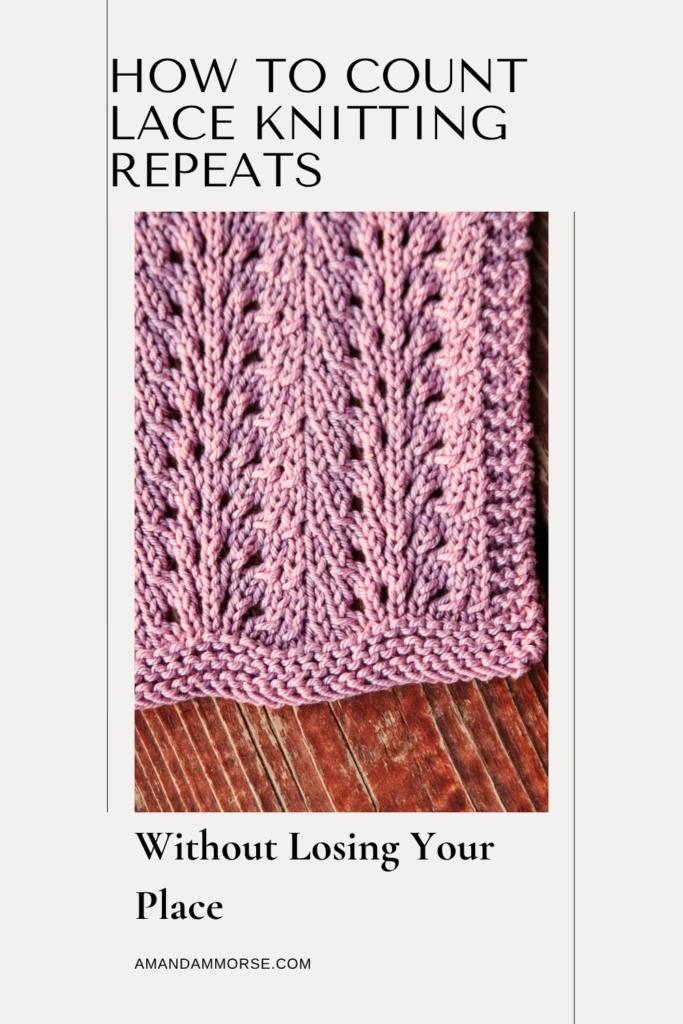
The easiest solution is to break each row into smaller, manageable sections. By placing stitch markers between repeats, tracking every completed row, and checking your stitch counts regularly, you can catch most mistakes before they travel through the rest of your project.
The Miriam Dishcloth is a perfect pattern for practicing these skills. It gives you a manageable piece of lace knitting while still letting you see how increases, decreases, and repeated stitch sequences work together.

Once you learn how to separate and check your lace repeats, the pattern becomes much easier to read. Instead of thinking about one long row of stitches, you can concentrate on one small section at a time.
You will also be able to recognize what each repeat should look like. That visual familiarity is one of the best ways to spot an error early.
What Do You Need to Count Lace Knitting Repeats?
You do not need a lot of special equipment to learn how to count lace knitting repeats, but a few simple tools can make the process much easier. You will need your knitting pattern, the appropriate yarn and needles, several stitch markers, and a reliable way to track your rows.
Stitch markers are especially useful because they create visible boundaries between each lace repeat. Place one marker after every complete pattern repeat unless the instructions tell you otherwise. The stitches before the first repeat or after the last repeat may be edge stitches, so keep those outside your main repeat markers.
For a practical example, cast on the Miriam Dishcloth and identify the repeated lace section in the written instructions or chart. Count the number of stitches in one repeat, then place a marker after each complete group.
Need a little more help choosing and placing markers? Read How To Use Stitch Markers before you begin.
Small locking markers, rings, or removable markers can all work well. Choose markers that are easy to see but not so large that they stretch the stitches beside them.

You will also need a row counter, a printed pattern you can mark, or a simple piece of paper and pencil. A notes app can work too, but make sure your tracking method is quick enough that you will actually use it after every row.
The best system is usually the simplest one. Mark the row as soon as you finish it rather than trusting yourself to remember later.
How Do You Divide Lace Repeats With Stitch Markers?
Start by locating the repeated section of the pattern. Written knitting patterns often place repeats between asterisks, brackets, or parentheses. A chart may show the repeat inside a bold or colored outline.
For example, imagine that a row of the Miriam Dishcloth includes two edge stitches, a repeated section worked several times, and two more edge stitches. Place the first marker after the edge stitches. Work one full repeat, place another marker, and continue until all repeats are separated.
Your row might be organized like this:
Edge stitches | Repeat 1 | Repeat 2 | Repeat 3 | Edge stitches
Now you can pause at every marker and check the section you just completed. Did you work the correct number of stitches? Did you include every yarn over? Did each decrease use the correct stitches?
This method is particularly helpful for projects with many repeats, sweaters or beanies.
Remember that stitch markers only separate the repeats. They do not correct the stitch count automatically. If a marker shifts because you accidentally added or lost a stitch, stop and inspect the repeat before moving it back.

Markers turn one intimidating row into several short checkpoints. When you reach a marker with the expected number of stitches, you know that section is probably correct.
When the count is wrong, the mistake is usually located between the current marker and the previous one. That is much easier to investigate than searching the entire row.
How Should You Track Rows in a Lace Pattern?
A lace motif often changes from one row to the next, so accurate row tracking is just as important as counting stitches. Mark each row immediately after completing it.
You can use:
- A click-style row counter
- A row-counting ring
- A sticky note placed beneath the current chart row
- A printed pattern with check marks
- A pencil and tally marks
- A digital knitting or notes app
When working flat, remember that many lace patterns include a pattern row followed by a simpler wrong-side row. Do not assume that every alternate row is identical unless the pattern specifically says so.
If you are new to openwork patterns, How To Knit Lace For Beginners explains how lace stitches work together and what to expect as the fabric develops.
Move your chart marker or record your row number before putting the project down. This tiny habit prevents the familiar question, “Did I just finish Row 7, or was I about to start it?”
For the Miriam Dishcloth, pause after every completed row and compare your knitting to the previous repeat. The fabric may look slightly uneven while it is still on the needles, but the location of the yarn overs and decreases should remain consistent.
How Do You Count Stitches After Yarn Overs and Decreases?
One of the most confusing parts of lace knitting is that the stitch count can change temporarily within a repeat. A yarn over creates a new stitch, while a decrease removes one or more stitches.
In many balanced lace patterns, every increase is paired with a decrease. This means the total number of stitches at the end of the row stays the same. However, the stitch count may not appear balanced halfway through the repeat.
For example:
- One yarn over adds one stitch.
- A knit-two-together decrease removes one stitch.
- A centered double decrease removes two stitches.
- Two yarn overs may be needed to balance a double decrease.
Instead of checking the stitch count after every individual instruction, count at the end of each complete repeat. That is the point where the increases and decreases should usually balance.
If the pattern says one repeat begins with 10 stitches and ends with 10 stitches, there should still be 10 stitches between the markers after you finish that section. When you find 9 or 11, inspect the repeat before continuing.
Yarn overs can feel unusual at first because they are created by moving the yarn around the needle rather than knitting into an existing stitch. Beginner Knitter Series Part 7: How To Do Yo Knit Stitch walks through the movement step by step.
Some lace rows are intentionally designed to increase or decrease the total stitch count. Always compare your count to the pattern rather than assuming that every row should contain the original number of stitches.

When a row includes several different decrease symbols or instructions, work slowly and check each repeat independently. Saying the stitches quietly as you work—“yarn over, knit two together, knit three”—can also help you stay in rhythm.
The goal is not to knit quickly. The goal is to know exactly where you are.
How Can You Spot Lace Knitting Mistakes Early?
The sooner you find a mistake, the easier it usually is to fix. Build a few quick checks into every lace row.
First, count the stitches between each pair of markers. Second, look at the placement of the yarn overs. They should form consistent columns or diagonal lines according to the design. Third, compare each repeat to the repeat beside it.
In the Miriam Dishcloth, repeated sections should look like matching versions of the same motif. If one repeat has an opening where the others do not, or one section appears unusually tight, pause and examine it.
Common lace mistakes include:
- Forgetting a yarn over
- Working an extra yarn over
- Missing a decrease
- Using the wrong decrease
- Knitting two repeats together
- Beginning the next repeat too early
- Slipping a stitch marker in the wrong place
A missed yarn over often appears as a section with no opening where one should be. It may also cause the stitch count in that repeat to be one stitch short. Use How To Fix A Missed Yarn Over In Knitting to repair the error without undoing more work than necessary.
After every pattern row, spread the stitches gently along the needle and inspect the fabric. Lace is difficult to judge when it is bunched tightly near the needle tip, so give the stitches enough room to open slightly.
Do not wait until the end of the project to study the motif. A ten-second check after each row can save you from unraveling several inches later.
What Other Patterns Can Help You Practice Lace Repeats?
Once you feel comfortable counting the repeats in the Miriam Dishcloth, try using the same system with other patterns:
Each project gives you another opportunity to build the same dependable routine: place markers, work one repeat, count the stitches, mark the row, and inspect the fabric.

As your confidence grows, you may find that you no longer need to count every section on every row. Even experienced knitters continue to use markers and regular stitch checks, though, because these tools make complicated-looking lace far more manageable.
The most important thing is to create a system you can repeat. Consistent habits will help you relax and enjoy watching the lace pattern emerge.

Have you ever lost your place in the middle of a lace repeat? Share your favorite row-counting trick—or your most memorable lace-knitting mix-up—in the comments!
This post may contain affiliate links. If you purchase through one of these links, I may earn a small commission at no additional cost to you.