
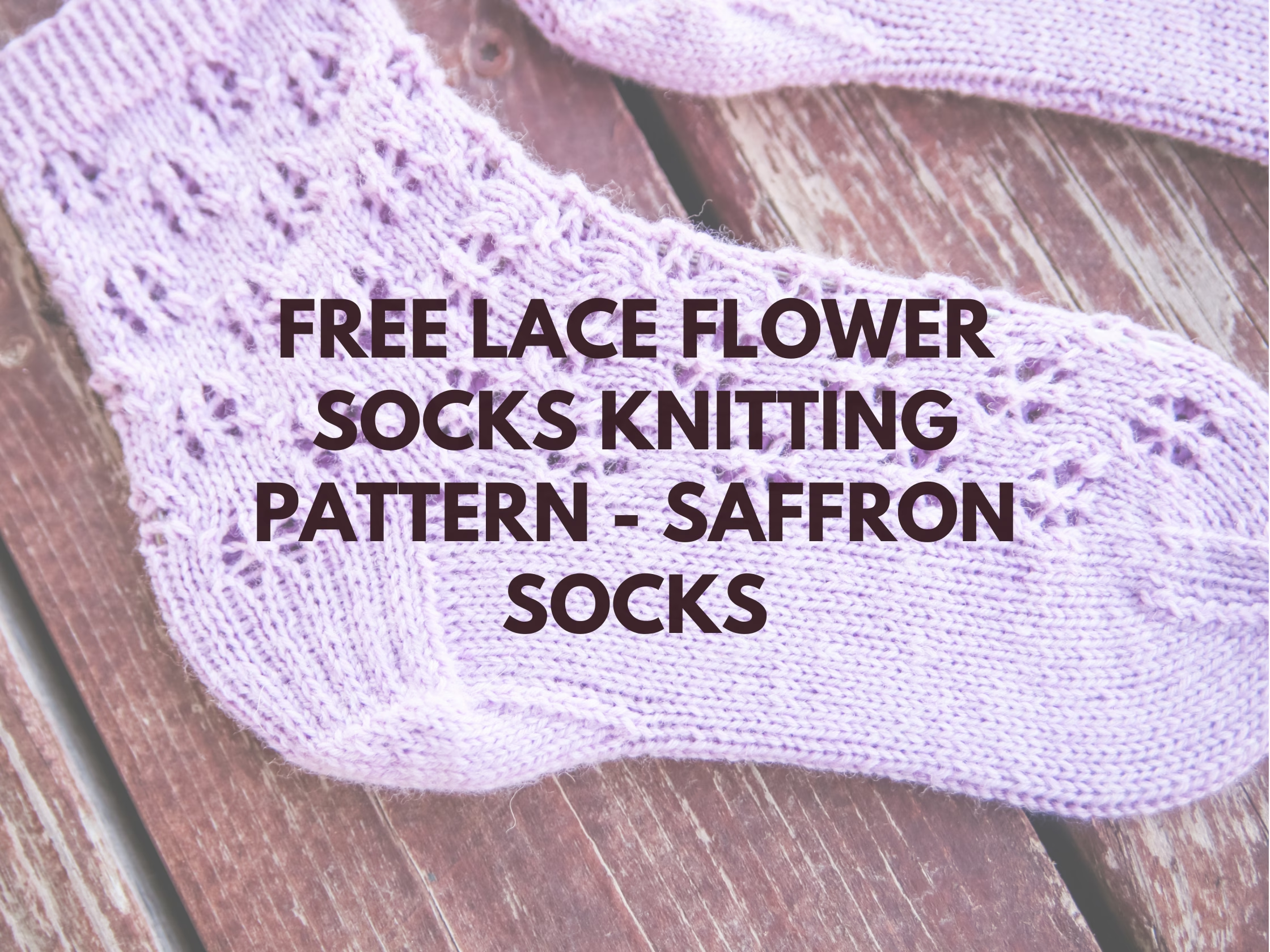
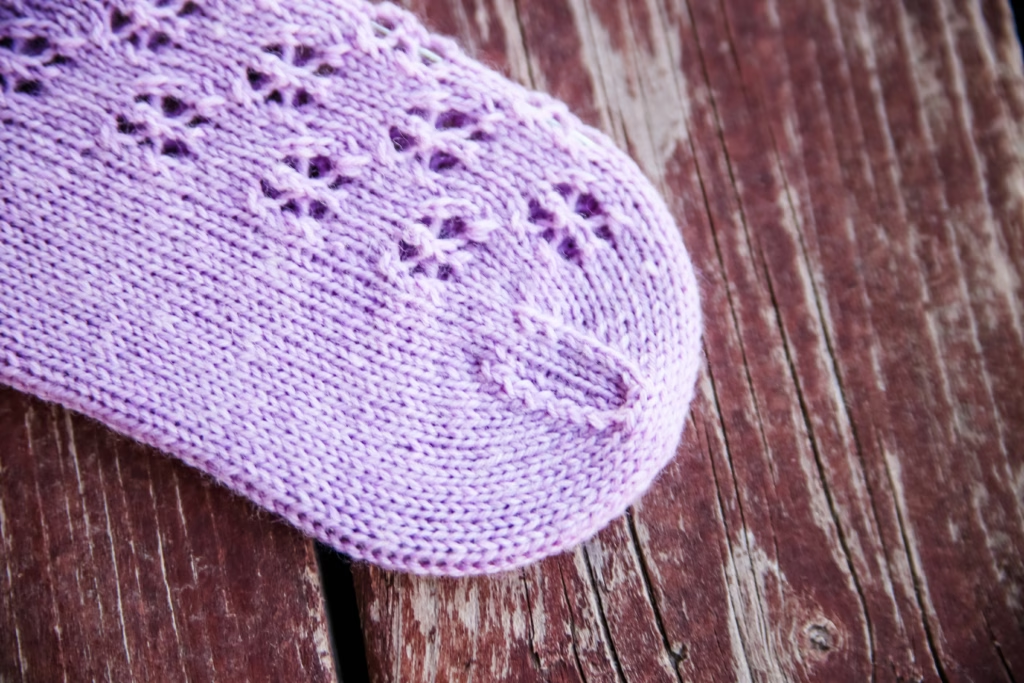
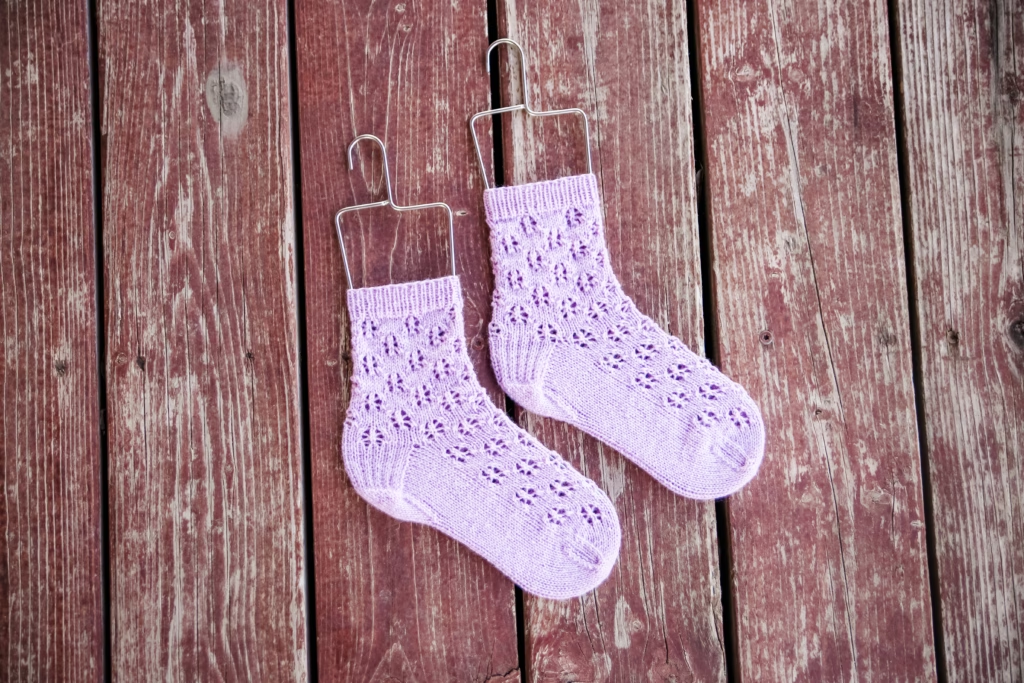
This lace flower socks knitting pattern is a beautiful addition to your collection of free sock knitting patterns, combining delicate detail with everyday wearability.
If you’ve been wanting socks that feel a little more special than plain stockinette but still approachable to knit, this is exactly what you’re looking for. These top down heel flap socks feature tiny lace flowers all over, giving you that pretty texture without making things overly complicated. Knit with KnitPicks Stroll and 2.25mm DPNs, this lace flower socks knitting pattern includes sizes from child through large adult, so you can make them for anyone.
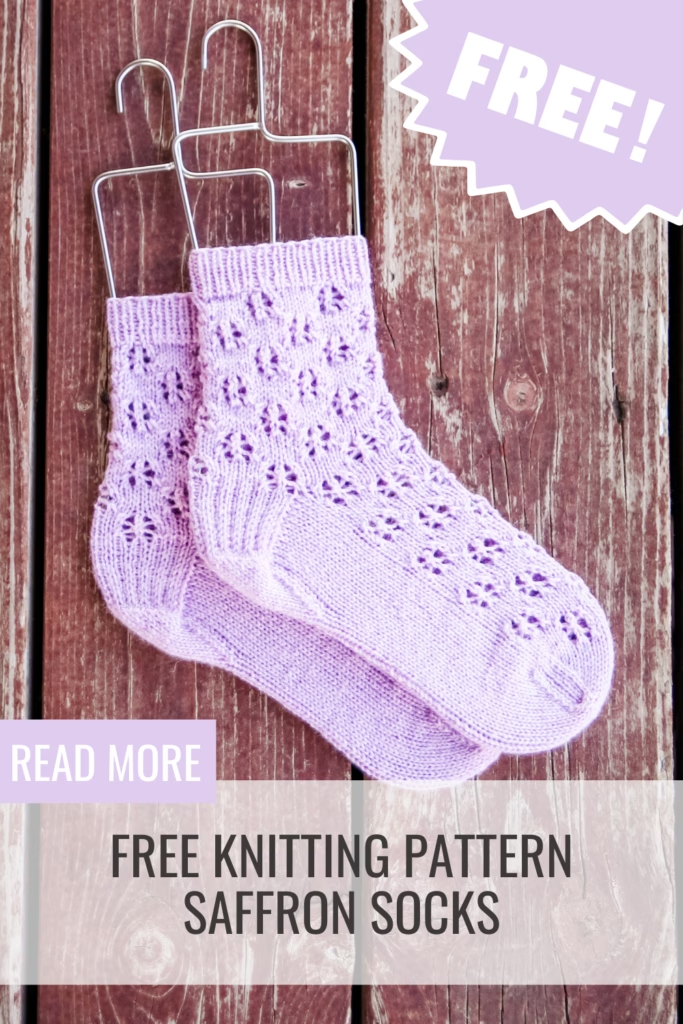
If you’ve ever struggled to find a lace sock that isn’t overwhelming or hard to follow, this sock knitting pattern solves that by keeping the repeats simple and rhythmic. You still get that detailed look, but in a way that feels doable and enjoyable from cuff to toe.
This lace flower socks knitting pattern gives you that sweet, detailed finish without slowing you down. It’s the kind of pattern you can settle into and actually enjoy knitting.
What materials do you need for this lace flower socks knitting pattern?
For this pattern, I kept things simple and reliable so you can focus on enjoying the knit.
Yarn: KnitPicks Stroll
Needles: US #1 / 2.25mm DPNs
Notions: yarn needle
I love using Stroll for this kind of project because it has just enough structure to show off the lace flower details while still being soft enough for everyday socks. It really lets the texture shine without getting lost.
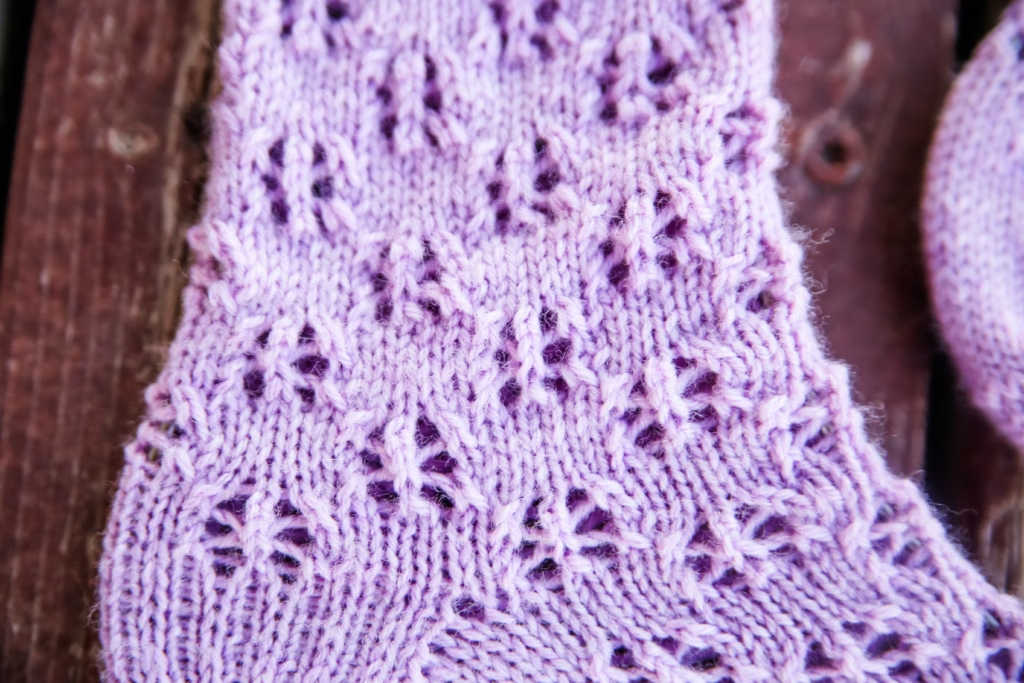
Then you can settle in and enjoy each repeat of those tiny flowers.
How is this lace flower socks knitting pattern worked?
This lace flower socks knitting pattern is worked top down with a classic heel flap construction, which makes it a great option if you already love traditional sock knitting methods. The lace pattern is repeated throughout the leg and foot, creating a consistent and polished look from top to toe.
The tiny flower stitches are simple to memorize, so once you get going, it becomes a really relaxing project. You don’t have to constantly check the pattern, which makes it perfect for knitting during busy days or while sitting with your family.
It’s one of those patterns that looks detailed but feels easy once you’re in the rhythm.
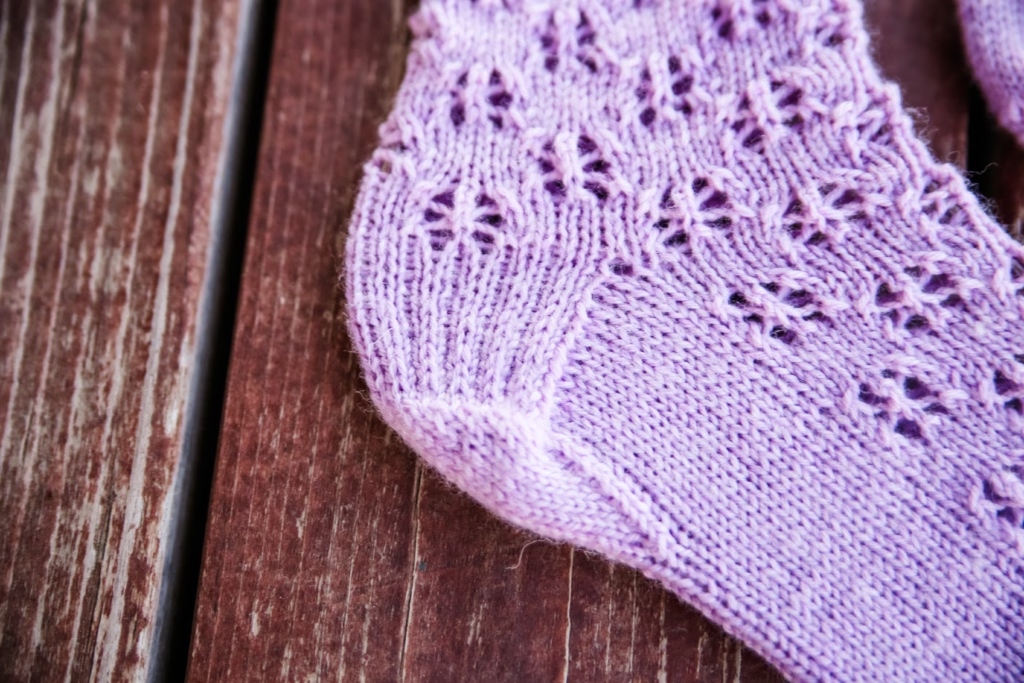
And honestly, it’s hard to stop at just one pair.
Looking for more free sock knitting patterns?
If you loved this lace sock knitting pattern, here are a few more you’ll want to try next:
• Simone Ankle Socks
• Sarah Socks
• Martha Socks
• Deborah Ankle Socks
• Harvest Socks
These all bring something a little different to your needles while still keeping things fun and wearable.
You’ll definitely find your next favorite cast on.
Saffron Socks Pattern
Materials:
Yarn: approximately 350, 400, 450yds of fingering weight sock yarn KnitPicks Stroll
(affilaite link) 231yd/50g
Needles: US #1 / 2.25mm DPNs (or circular for magic loop) I like KnitPicks Reflections
Notions: stitch markers, needle
Gauge: 8sts x 11rows per inch
sizing:
sizing: child, adult small,
adult large
Finished measurements (unstretched):
Foot Length (adjustable): 7.5, 9, 10ins or 19, 22.5, 25cms
Leg length (adjustable): 4, 5, 6ins or 10, 12.5, 15cms
Model is a US child size 10 made in the child size
Abbreviations can be found on the last page.
Saffron Stitch Pattern
In the Round
Round 1 – [k5, k2tog, yo k1, yo, ssk]
Round 2 – knit across
Round 3 – [k6, yo, vdd, yo, k1]
Round 4 – knit aross
Round 5 – [k5, k2tog, yo k1, yo, ssk]
Round 6 – knit across
Round 7 – [ktog, yo, k1, yo, ssk, k5]
Round 8 – knit across
Round 9 – [k1, yo, vdd, yo, k6]
Round 10 – knit across
Round 11 – [ktog, yo, k1, yo, ssk, k5]
Round 12 – knit across
Flat
Round 1 – [k5, k2tog, yo k1, yo, ssk]
Round 2 – purl across
Round 3 – [k6, yo, vdd, yo, k1]
Round 4 – purl aross
Round 5 – [k5, k2tog, yo k1, yo, ssk]
Round 6 – purl across
Round 7 – [ktog, yo, k1, yo, ssk, k5]
Round 8 – purl across
Round 9 – [k1, yo, vdd, yo, k6]
Round 10 – purl across
Round 11 – [ktog, yo, k1, yo, ssk, k5]
Ruond 12 – purl across
Cuff
Cast on 50, 60, 70 sts, join for working in the round.
If using dpn separate stitches as follows:
1st needle – 10, 15, 20sts
2nd needle – 15, 15,15sts
3rd needle – 25, 30, 35sts
If working on small circulars or magic loop place a marker at beginning of round and
at 25, 30, 35sts
Work in 1×1 rib (k1p1 around) for 10, 12, 14 rounds
Set-up round – knit around
Then work in the charted Saffron stitch pattern until
Work rounds 1-12 above until piece measures 4, 5, 6 inches or 10, 12.5, 15cms from
cast on (or desired length)
Heel Flap
Next round: Work across the 1st and 2nd needles or to sm in pattern. Place these
stitches on hold. The heel flap will be worked flat, turning after each row, with only
the 25, 30, 35 sts on the 3rd needle
Row 1 (RS): (sl1, k1) to last st (1, 0, 1) st, k(1, 0, 1), turn work.
Row 2 (WS): sl1, purl to end, turn work. Work rows 1-2 total of 11, 14, 16 times.
This is a total of 22, 28, 32 rows.
Heel Turn
Row 1 (RS): sl1, k 13, 16, 19, ssk, k1, turn work.
Row 2 (WS): sl1, p4, 5, 6, p2tog, p1, turn work.
Row 3: sl1, knit to 1 st before the gap, ssk, k1, turn work.
Row 4: sl1, purl to 1 st before the gap, p2tog, p1, turn work.
Repeat rows 3-4 until all stitches have been worked:
15, 18, 21 sts remain.
Knit across these heel stitches slipping the first st.
Gusset
Pick up and knit 1 along heel flap, pm, pick up and knit 11, 14, 16 sts along the edge
of heel flap, pm, Work in established stitch pattern across 25, 30, 35 that were on
hold, pm, pick up and knit 11, 14, 16 sts, pm, pick up and knit 1 along heel flap, K8,
9, 11 sts, mark the new BOR (located at the bottom of the foot).
[64, 78, 90 sts]
Round 1: knit to marker, sm, knit to marker, sm, work in established saffron Stitch
pattern to marker, sm, knit to marker, sm, k to bor marker
Round 2: knit to 2sts before marker, k2tog, sm, knit to marker, sm, work in
established saffron Stitch pattern to marker, sm, knit to marker, sm, ssk, knit to end
[2 sts dec]
Work rounds 1-2 a total of 7, 9, 10 times. [50, 60, 70 sts]
After last round, remove bor marker, knit 12, 15, 17sts, place bor marker.
Foot
Continue working in the round in established stitch pattern until the piece measures
5.5, 7, 8ins or 14, 17.5, 20cms (or desired length) from back of heel, or 1.5, 2, 2.25ins
or 4, 5, 5.5 cms short of desired foot length. (Example: I wear a US size 10 and need
to knit to 8.25ins before the toe decreases.)
The Saffron stitch pattern ends here. You will work in stockinette throughout for the
remainder of the socks.
Toe
Round 1: k1, ssk, knit to 3 sts before marker, k2tog, k2, ssk, knit to 3 sts before end
of round, k2tog, k1 [4 sts dec]
Round 2: knit
Work rounds 1-2 a total of 7, 9, 11 times. Until 22, 24, 26 sts remain.
For a left-handed tutorial of these decreases visit my youtube here
Cut yarn leaving a tail long enough to sew the toe closed, then graft toe using
Kitchener stitch.
Weave in all ends
Kitchener stitch:
Place half the stitches on one needle, half the stitches on the other needle, (top and
bottom NOT side to side)
Cut yarn (leaving a long yarn tail) and thread through a blunt needle.
Set-up steps: Insert needle purlwise (back to front) through the first st on front
needle, leaving the st on the needle. Then insert needle knitwise (front to back)
through the first st on the back needle, leaving the st on the needle.
Step 1: Insert needle knitwise through first st on front needle, then slip this st off the
needle.
Step 2: Insert needle purlwise through the second st on front needle, leaving the st on
the needle.
Step 3: Insert needle purlwise through first st on back needle, then drop this stitch off
the needle.
Step 4: Insert needle knitwise through second st on back needle, leaving the st on the
needle.
From this point to the end, repeat steps 1-4.
Kitchener stitch can be intimidating, but you get into a rhythm:
Front needle: knitwise drop off, purlwise leave on, Back needle: purlwise drop off,
knitwise leave on, Repeat!
At the end of the row, there is only 1 stitch left on each needle.
Work steps 1 and 3 once more.
For a left-handed video tutorial of this visit my youtube here
Abbreviations
Bor- beginning of round
k – knit
k2tog -knit 2 stitches together
P – purl
pm – place marker
ssk – slip next st knitwise, slip next st knitwise, place stitches back onto left needle,
knit both slipped sts together
sm – slip maker
st – stich
sts – stitches
vdd – vertical double decrease – slip the next 2 stitches on the left needle as if to knit them
together and then slip them off the left needle and onto the right needle, knit the next st,
pass slipped stitches over the knitted stitch together
yo – yarn over
If you make these socks, I would love to hear how it turned out for you. Let me know in the comments what yarn you used or who you made them for—I always enjoy seeing your projects and ideas!
This post may contain affiliate links, which means I may earn a small commission at no extra cost to you. Thank you for supporting my work!