
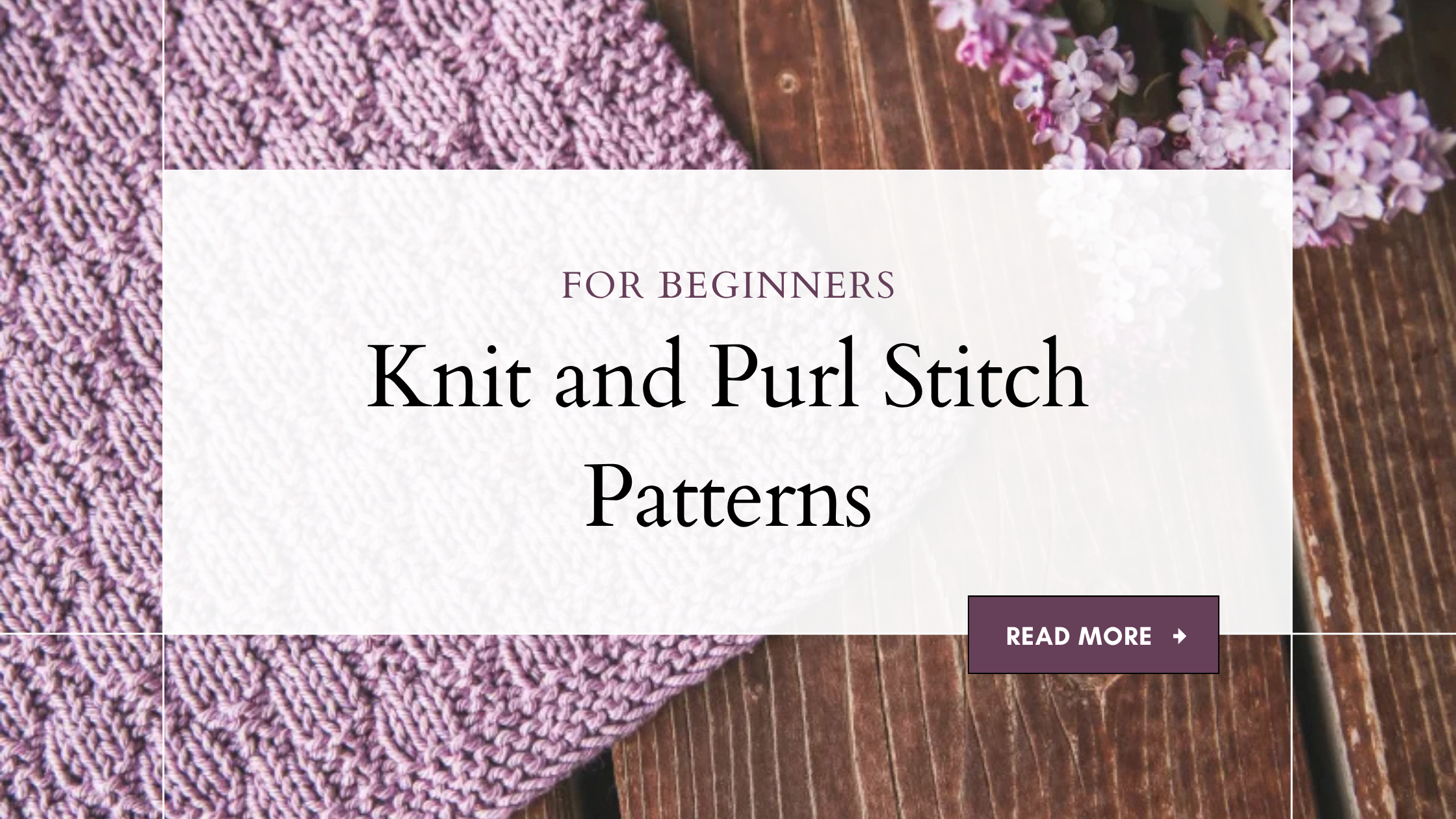
Knit and purl stitch patterns are some of the best beginner knitting patterns to learn because they help you create texture, structure, and beautiful handmade projects without needing complicated techniques.
If you are a newer knitter and you feel like every pretty pattern requires lace, cables, colorwork, or some wild chart that makes your brain want to take a nap, this post is for you. The truth is, you can make so many beautiful designs with only knit stitches and purl stitches. Once you understand how those two basic stitches work together, a whole new world of textured knitting patterns opens up. These knit and purl stitch patterns are simple enough for beginners but still interesting enough to make your projects look polished and intentional.

Knit and purl stitches may be basic, but they are definitely not boring. These two stitches can create ribbing, seed stitch, basketweave textures, broken rib, diamonds, chevrons, and so many other beautiful designs.
You can see broken rib in action with the Judah Headband, a simple textured ear warmer made entirely with an easy knit-and-purl repeat
That means you do not have to rush into advanced techniques before you are ready. You can build confidence, practice reading your knitting, and still make projects you are excited to use or gift.
What Supplies Do You Need for Knit and Purl Stitch Patterns?
The best part about learning knit and purl stitch patterns is that you do not need a huge pile of supplies to get started. You really only need yarn, knitting needles that match your yarn weight, scissors, and a yarn needle for weaving in your ends.
If you are practicing a new stitch pattern, I usually recommend starting with a smooth, light-colored yarn. A worsted weight yarn is a great choice because the stitches are easy to see, and the fabric works up quickly enough that you can actually watch the texture form as you knit.
Cotton yarn like Knitpicks Dishie is a good option for dishcloths, wool or acrylic blends like premier yarns Premier Anti-pilling work well for hats and scarves, and a soft DK or worsted yarn is perfect for beginner-friendly accessories. The main thing is to choose a yarn that lets you clearly see the difference between your knit stitches and purl stitches.

When you are just starting out, skip fuzzy, highly textured, or very dark yarns for practice swatches. Those yarns can make it harder to see what is happening on your needles.
Once you feel comfortable with the stitch pattern, you can absolutely try it in different yarns. That is one of the fun parts of knitting: the same simple stitch pattern can look completely different depending on the yarn you choose.
How Do Knit and Purl Stitch Patterns Create Texture?
Knit and purl stitch patterns create texture by changing which side of the stitch faces the front of your work. Knit stitches usually look like little V shapes, while purl stitches create small bumps.
When you combine those two stitches in different ways, you can create raised areas, recessed areas, stretchy fabric, flat fabric, or all-over texture. That is why a simple pattern like knit one, purl one can become ribbing, while alternating knits and purls across rows can create seed stitch or moss stitch.
This is also why learning to read your knitting is so helpful. Once you can spot the difference between a knit stitch and a purl stitch on your needle, it becomes much easier to follow textured knitting patterns without constantly checking every single instruction.
Broken seed stitch is another simple way to combine knits and purls, and you can see it used throughout my Aaron Phone Bag.

A great beginner tip is to say the stitches out loud as you work across the row. It might feel silly, but it helps your hands and brain stay together while you are learning a new repeat.
Another helpful tip is to use stitch markers between repeats if the pattern has a longer texture. This makes it easier to catch mistakes early instead of discovering three inches later that your pattern shifted somewhere.
What Are Some Easy Knit and Purl Stitch Patterns for Beginners?
There are so many beginner-friendly knit and purl stitch patterns you can try once you know the basic knit stitch and purl stitch. Some of the easiest ones are rib stitch, seed stitch, moss stitch, garter rib, broken rib, basketweave, and simple diamond textures.
Ribbing is usually one of the first textured patterns knitters learn because it is practical and stretchy. You will see it on hat brims, sweater cuffs, socks, cowls, and scarves because it helps the fabric pull in and fit nicely.
Seed stitch is another great beginner texture because it alternates knit and purl stitches to create a bumpy fabric that looks more detailed than it actually is. Basketweave patterns are also a fun option because they use blocks of knit and purl stitches to create a woven-looking texture without using any advanced techniques.
The biggest thing to remember is that beginner does not mean plain. Simple knit and purl combinations can create designs that look thoughtful, textured, and beautiful without adding extra stress to your knitting time.

If you are nervous about trying a new stitch pattern, start with a small swatch before using it in a full project. This lets you practice the repeat, see how the fabric behaves, and decide if you like the texture before committing to a larger make.
A dishcloth, scarf, ear warmer, or hat is also a great place to practice. These projects give you enough room to see the texture clearly without turning the practice into a giant project that takes forever.
What Beginner Patterns Use Knit and Purl Texture?
If you want to see how knit and purl stitch patterns work inside real knitting projects, these patterns are a great place to start:


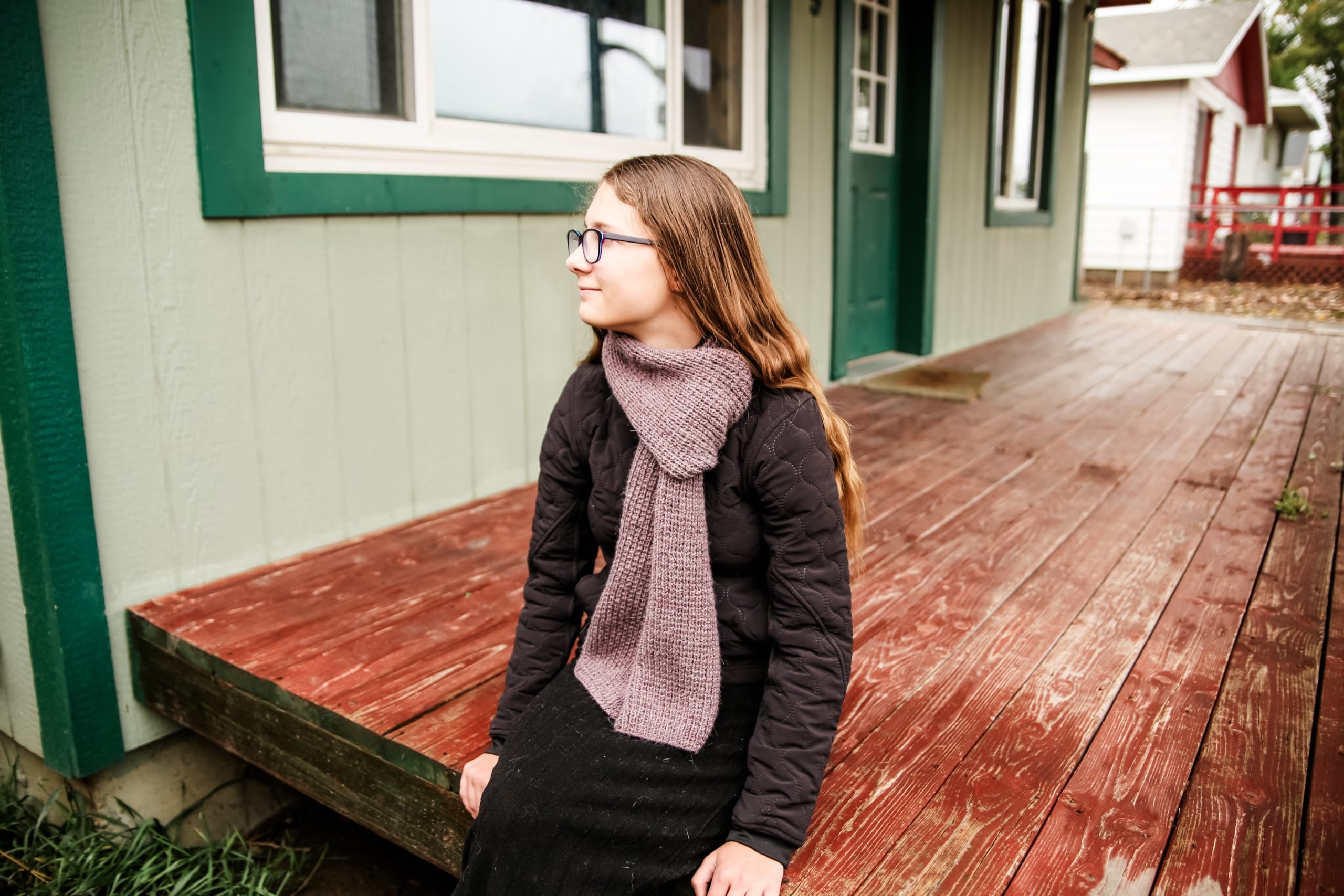


These patterns are great examples of how simple knit and purl stitches can turn into something much more interesting than plain stockinette. You can use them to practice texture, build confidence, and get comfortable following stitch repeats in real projects.
Each of these projects uses basic stitches in a way that feels approachable but still gives you a finished piece with personality. That is one of my favorite things about textured knitting patterns: they look more detailed than they feel once the rhythm clicks.

If you are still in the early stages of learning to knit, do not feel like you have to jump into complicated techniques right away. Knit and purl stitches are the foundation for so many beautiful knitting patterns, and they are worth practicing well.
Once you feel comfortable switching between knits and purls, you will start noticing texture everywhere. Suddenly, a simple scarf, dishcloth, cowl, or hat can become the perfect place to try a new stitch pattern.

What is your favorite knit and purl texture to make: ribbing, seed stitch, basketweave, or something else? Leave a comment and tell me which one you love most, or which one you want to try next.
This post may contain affiliate links, which means I may earn a small commission at no extra cost to you if you choose to make a purchase through one of my links.