
Knitting curls because stockinette stitch naturally rolls toward the knit side and away from the purl side on every edge.
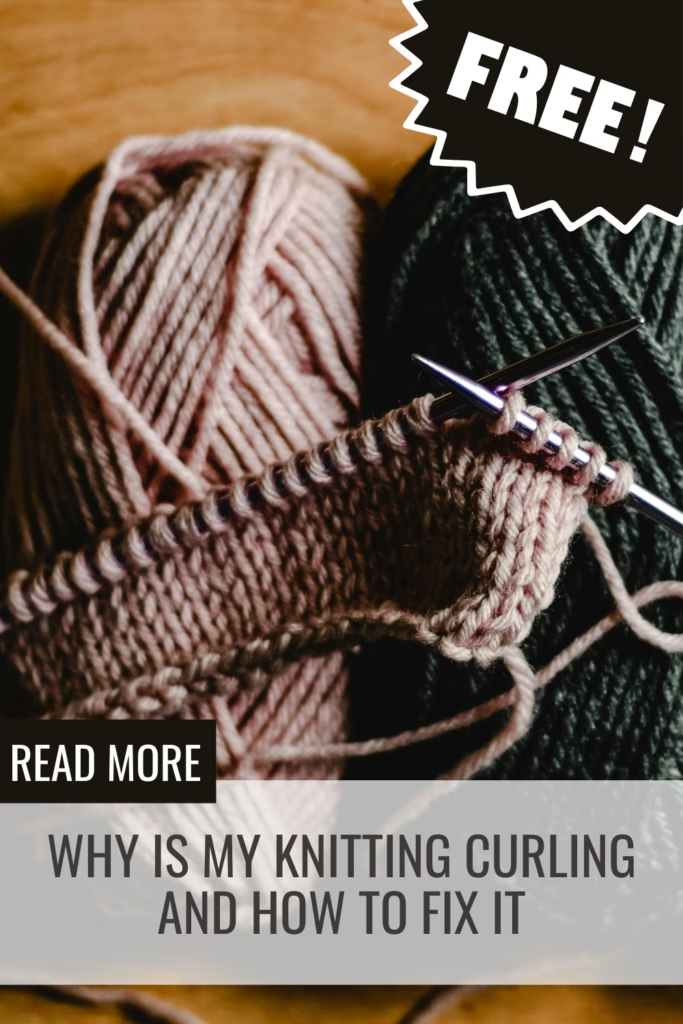
If you are wondering why is my knitting curling, the most common reason is that you are working stockinette stitch. Stockinette naturally curls toward the knit side and away from the purl side on all edges because of the way knit and purl stitches are formed. This is normal and does not mean you are doing anything wrong. The good news is that knitting curl can often be reduced or prevented by adding a border, choosing a stitch pattern that lies flat, blocking the fabric, or adding an edge after the piece is finished. In this knitting tutorial, I’ll walk you through what causes curling, how to fix it if possible, and how to keep it from happening in future projects.
What will you learn in this knitting tutorial?
If you’ve ever cast on something that looked nice for about five minutes and then started rolling itself up, you are definitely not alone. One of the most common beginner questions is why is my knitting curling.
This tutorial is for knitters who want a clear, simple explanation without a bunch of confusing extra fluff. I’m going to walk through what causes curling, when it is normal, and what you can do about it.
This post is especially helpful for beginners, but honestly, even experienced knitters sometimes start a project and think, oh right, this stitch is going to roll.
By the end, you’ll know:
- why knitting curls
- how to fix curling if possible
- how to prevent curling before you start
- which stitch patterns are more likely to lie flat
This is a beginner friendly knitting tutorial with a step-by-step approach, clear explanations, and practical tips you can use right away.
What materials do you need to work through this knitting technique?
You do not need anything fancy to understand or fix curling, but a few basic tools make it much easier to see what is happening in your fabric.
Here’s what I recommend:
- Worsted weight yarn (affiliate link) – use code APSAMANDA033 for 20% off!
- Knitting needles that match your yarn (affiliate link)
- Blocking mats (affiliate link)
- Blocking pins (affiliate link)
- A crochet hook for adding a border if needed (affiliate link)
- A yarn needle for finishing edges (affiliate link)
A smooth worsted weight yarn is great for practice because it makes the stitch structure easy to see. Your knitting needles that match your yarn will help your swatch behave the way it should without adding weird tension issues from using the wrong size needle.
If you want to flatten a finished piece, blocking mats and blocking pins are helpful. And if you decide to add an edge later, a crochet hook and yarn needle come in handy too.
For even more of my favorite yarn and tools check out my shop my knitting bag page.
Why is my knitting curling?
The most common reason knitting curls is stockinette stitch.
Stockinette is made by knitting on one side and purling on the other, which creates a smooth knit side on the front and a bumpy purl side on the back. That fabric structure naturally wants to roll toward the knit side and away from the purl side on every edge.
That means:
- the bottom edge curls up
- the top edge curls down
- both side edges also curl in
This is not a mistake. It does not mean your tension is bad. It does not mean you accidentally ruined your project. It just means stockinette is doing what stockinette does.
Some stitch patterns lie flat because they balance knit and purl stitches more evenly. Stockinette does not. That imbalance is what creates the curl.
Step 1: How can you tell whether your knitting is curling because of the stitch pattern?
The first thing to check is whether you are working stockinette or a stockinette-heavy fabric.
Look at your knitting:
- if one side is mostly smooth V-shaped stitches
- and the other side is mostly purl bumps
- and the edges are rolling toward the smooth knit side
then the curling is almost certainly caused by the stitch pattern itself.
Why does this step matter?
This matters because you do not want to waste time trying to fix a problem that is actually normal. If the curling comes from stockinette, the answer is not to redo every stitch tighter or looser and hope for the best. The answer is to use a method that actually helps.
What is a common mistake here?
A very common mistake is assuming curling means something went wrong with your knitting technique. Usually, it did not. Usually, it just means you picked a stitch pattern that naturally rolls.
Step 2: How can you fix curling by adding a border?
One of the best ways to reduce curling is to add a border that lies flat.
Good border options include:
- garter stitch
- ribbing
- seed stitch
- moss stitch
If you are still in the early stages of a project, this is often the easiest fix.
How do you add a simple garter border?
- Knit the first 3 to 5 stitches of every row.
- Work your main stitch pattern across the center.
- Knit the last 3 to 5 stitches of every row.
You can also work several rows of garter stitch at the top and bottom of the piece.
Why does this step matter?
A border made from garter stitch, ribbing, or seed stitch helps balance the fabric and gives the edges something more stable than plain stockinette. That makes the piece much more likely to lie flat.
What is a common mistake here?
A lot of knitters add only one stitch on each side and hope that will fix it. Usually that is not enough. A border needs enough width to actually support the edge. Three to five stitches is a much better starting point.
Step 3: How can blocking help fix curling?
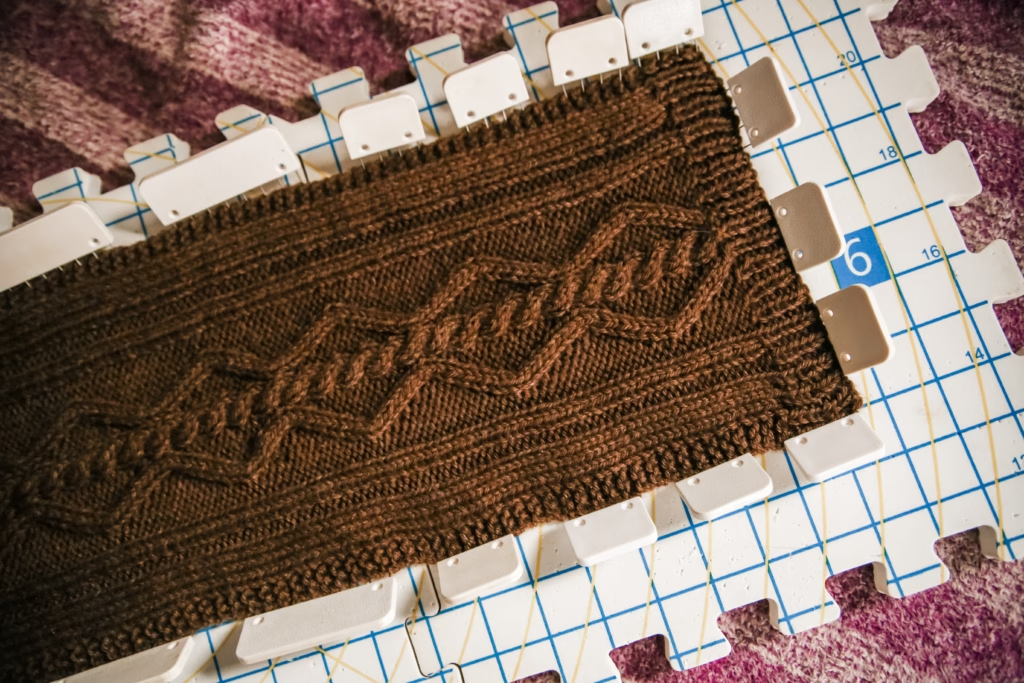
Blocking can help relax the fabric and reduce some curling, especially if the curl is mild.
How do you block curled knitting step-by-step?
- Fill a basin with lukewarm water.
- Soak the knitted piece gently.
- Lift it out and press out excess water without wringing it.
- Lay it flat on blocking mats.
- Gently shape the fabric and pin it in place with blocking pins.
- Let it dry completely before unpinning.
Why does this step matter?
Blocking helps the stitches settle and can improve the look of the fabric. Sometimes a piece that looks like a rolled-up noodle fresh off the needles looks much better after blocking.
What should you know before relying on blocking?
Blocking can help, but it does not completely erase the natural behavior of stockinette. If the stitch pattern strongly wants to curl, blocking alone may not permanently force it flat.
What is a common mistake here?
One common mistake is expecting blocking to completely solve strong stockinette curl forever. It might improve it, but it does not change the underlying structure of the fabric.
If you want to steam instead of soaking check out the How to Steam Block Your Knits tutorial for a faster method of blocking.
Step 4: How can you fix curling after the project is already finished?
If the project is already finished, you still have options.
One of the easiest fixes is to add an edge after the fact.
How can you add a crochet border?
- Use a crochet hook to join yarn at the edge.
- Work a round or row of single crochet evenly around the curled section.
- Keep the stitches even and not too tight.
- Weave in the ends with a yarn needle
How can you add a knitted border?
- Pick up stitches along the edge with your knitting needles that match your yarn.
- Work several rows of garter stitch, ribbing, or seed stitch.
- Bind off loosely so the edge can still relax.
Why does this step matter?
If you love the project and do not want to start over, adding a border can make it much more usable. This works especially well for scarves, blankets, dishcloths, and garment edges.
What is a common mistake here?
The biggest mistake is making the added border too tight. A tight edge can create puckering instead of fixing the curl.
Step 5: How can you prevent knitting from curling before you even start?
Preventing curling is usually easier than fixing it later.
What stitch patterns lie flatter than stockinette?
These are all good options if you want fabric that behaves better:
- garter stitch
- seed stitch
- moss stitch
- ribbing
- basketweave
- other stitch patterns that balance knit and purl stitches
Why does this step matter?
Choosing the right stitch pattern from the start saves time, frustration, and a whole lot of staring at your knitting like it personally offended you.
What is a common mistake here?
A lot of beginners pick stockinette for scarves or blankets because they like the smooth look. Then they are surprised when it curls. Stockinette is lovely, but for flat pieces, it often needs a border or a different design plan.
Step 6: When is curling actually supposed to happen?
Sometimes curling is not a problem at all. Sometimes it is part of the design.
Rolled edges are often used on purpose for:
- hems
- cuffs
- decorative edges
- simple finishing details
In those cases, the curl gives the fabric a soft rolled look without extra edging.
Why does this step matter?
It helps to know the difference between a problem and a design feature. Not every curl needs to be fixed. Sometimes it belongs there.
What knitting habits can make curling look worse?
Curling mostly comes from the stitch pattern, but a few things can make it seem more dramatic.
Can tight cast-ons make curling worse?
Yes. A tight cast-on can make the edge pull harder and look even more curled.
Can uneven tension make curling look worse?
Yes. Very uneven tension can make the fabric look messier and make the curl more noticeable.
Can narrow pieces curl more dramatically?
Absolutely. A skinny stockinette scarf can look especially determined to roll itself into a tube.
Why does this matter?
It helps you know what is normal curl and what might be extra tension issues layered on top of it.
What are the most helpful tips for dealing with curling in a beginner friendly way?
Here are a few simple tips that make a big difference:
- Swatch before starting a project.
- If you want a flat piece, do not rely on plain stockinette alone.
- Add a border from the beginning whenever possible.
- Block the finished fabric to improve the overall look.
- Do not panic when stockinette curls. It is normal.
This is one of those knitting things that feels dramatic the first time you see it and then later becomes one of those oh yep, there it is moments.
What are some questions knitters ask about curling?
If the pattern uses stockinette stitch, curling is often expected. Some patterns include a border to control it, and some use the curl as part of the design.
This usually happens when the scarf is knit in stockinette without a wide enough border. Stockinette naturally rolls toward the knit side on all edges, so narrow scarves are especially prone to this.
Blocking can help a lot, but it usually does not permanently remove strong stockinette curl all by itself. Borders and stitch choice are often more effective.
No. Garter stitch lies much flatter because the knit and purl structure is balanced across the fabric.
Not always. If you are very early in the project, adding a border or restarting with a flatter stitch pattern may be worth it. If the project is farther along, blocking or adding an edge later may be enough.
What should you remember if your knitting keeps curling?
If you have been asking why is my knitting curling, the big thing to remember is this: stockinette stitch naturally curls toward the knit side and away from the purl side on all edges.
That means your knitting is probably not misbehaving. It is just being stockinette.
The best fixes are usually:
- add a border
- block the fabric
- add an edge after finishing
- choose a flatter stitch pattern next time
Once you know what causes the curl, it becomes much easier to decide whether to fix it, work with it, or avoid it altogether.
Will you share your curling disaster or your best fix?
If you have had a project curl like crazy, leave a comment and tell me about it. I’d love to hear what you were making, whether you fixed it, and what ended up working best for you.
Your experience might help another knitter who is staring at a curling project right now wondering what on earth happened.
This post contains affiliate links. If you purchase through them, I may earn a small commission at no extra cost to you.