
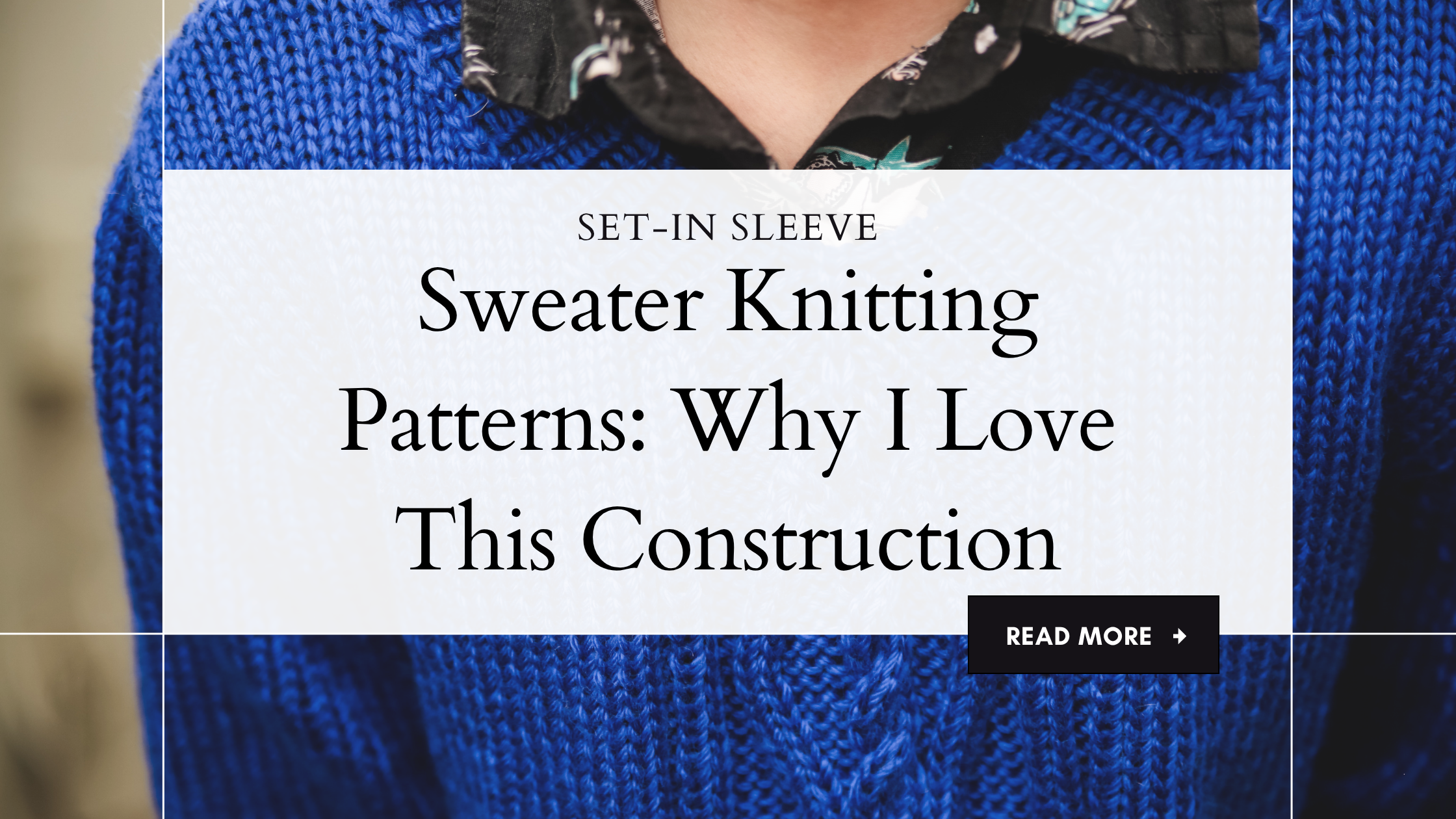
Set-in sleeve sweater knitting patterns are some of my favorite sweater projects when I want a handmade sweater that has a clean shoulder, a polished fit, and a shape that feels a little more like something you would buy in a store.
If you have mostly knit raglan sweaters, drop sleeve sweaters, or very simple beginner sweater shapes, set-in sleeves can feel like the next big step. They do take a little more attention, but they are not nearly as scary as they may look at first. In this post, I want to walk through what set-in sleeves are, why I love this sweater construction, and which of my free sweater knitting patterns use this beautiful style.

Set-in sleeves are especially nice when you want a sweater that fits neatly through the shoulders and upper body.
Instead of the sleeve growing out from the neckline or hanging straight down from a dropped shoulder, a set-in sleeve is shaped to fit into an armhole. That shaping is what gives these sweaters such a clean, structured look.
If you are ready to try sweater knitting patterns that feel a little more polished, set-in sleeve sweater knitting patterns are a great place to grow your skills.
What Are Set-In Sleeve Sweater Knitting Patterns?
Set-in sleeve sweater knitting patterns are sweater patterns where the body and sleeves are shaped separately, and the sleeves are joined into a shaped armhole.
In simple terms, the sweater has a shoulder and armhole area that is built more like a sewn garment. The sleeve cap is shaped so it fits into that opening. This is different from a raglan sweater, where the sleeve shaping usually runs diagonally from the neckline to the underarm.
Set-in sleeve construction can be worked in different ways. Some patterns are knit flat and seamed together. Some are worked in pieces and then joined. Some may include picked-up sleeves or other construction methods.

The main thing to know is that set-in sleeves are all about shaping.
The shoulder area is more defined, the sleeve has a planned place to sit, and the finished sweater often has a neater fit across the upper body. That is one of the biggest reasons I love using this construction for boys sweaters, children’s sweaters, and classic wardrobe pieces.
Set-in sleeves do not have to be overly complicated. They just ask you to slow down a little and pay attention to shaping, stitch counts, and finishing.
Why Do Set-In Sleeves Give Sweaters Such a Nice Fit?
Set-in sleeves give sweaters a nice fit because the shoulder and sleeve are shaped to work with the natural lines of the body.
A raglan sweater has its own place, and I love a good raglan too. Raglans are simple, comfortable, and easy to knit. But set-in sleeve sweater knitting patterns give a different finished look. The shoulder seam sits closer to where your actual shoulder ends, which can make the sweater look more tailored.
That defined shoulder can also help the sweater hang better.
Instead of extra fabric bunching around the upper arm or shoulder, the sleeve has its own shaped space. This is especially helpful for sweaters that are meant to look a little more structured, like boys pullovers, classic cardigans, or dressier handmade pieces.

I also love set-in sleeves for children’s sweaters because they can make the finished project look so neat.
Kids are hard on clothes, and I like handmade sweaters that can be worn often but still look nice. A set-in sleeve sweater can feel practical and polished at the same time, which is always a win for me.
If you have been wanting your sweaters to look a little less homemade and a little more finished, this construction is worth trying.
Are Set-In Sleeve Sweater Knitting Patterns Hard?
Set-in sleeve sweater knitting patterns are not necessarily hard, but they do usually require a little more attention than a basic raglan or drop sleeve sweater.
The part that makes knitters nervous is usually the sleeve cap or the seaming. And I get it. Any time a pattern starts talking about shaping and attaching pieces, it can feel like you need to be an advanced knitter before you even begin.
But really, set-in sleeves are just a series of small steps.
You shape the armhole. You shape the sleeve cap. Then you attach the sleeve carefully so everything lines up the way it should. It is not about being perfect. It is about going slowly, checking your stitch counts, and giving yourself a little grace if you have to adjust something.

One of my best tips is to use locking stitch markers or pins when setting in the sleeve.
Mark the center top of the sleeve cap, line it up with the shoulder seam, and then pin or clip the sleeve into place before sewing. That helps spread the fabric evenly and keeps you from ending up with too much sleeve on one side.
A good seam can make a huge difference in how your sweater looks when it is finished.
What Materials Work Best for Set-In Sleeve Sweaters?
The best materials for set-in sleeve sweater knitting patterns are yarns that show stitch definition well and hold their shape after blocking.
Since set-in sleeves rely on shaping, I usually like using yarns that do not grow too much or turn floppy after washing. Wool, wool blends, acrylic blends, cotton blends, and sturdy everyday yarns can all work depending on the pattern.
For children’s sweaters, I especially love yarn that is washable and practical.
A beautiful sweater is great, but if it is for a kid, I want it to survive real life. That means I usually reach for yarns that can handle regular wear, repeated washing, and all the things children do while wearing handmade knits.

Needles matter too, especially with sweater knitting.
You want to get gauge before starting so your sweater ends up the right size. With set-in sleeves, gauge affects more than just the width of the sweater. It also affects the armhole depth, sleeve width, and how the sleeve cap fits into the body.
That is one place where a gauge swatch is absolutely worth the time.
Which Sweater Patterns Use Set-In Sleeves?
Several of my sweater patterns use set-in sleeve construction, and they are great examples of how this style can work for different ages, looks, and finished projects.
Here are a few set-in sleeve sweater patterns and related pieces to check out:
• Youth Peter Sweater
• Child Grace Pullover
• Child Puff Sleeve Tee
• Adult Puff Sleeve Tee
The Youth Peter Sweater is a great place to look if you like the structure of a set-in sleeve style but want a sleeveless project. Since a vest still has shoulder and armhole shaping, it can help you understand how that upper body construction works without needing to set in full sleeves.
The Child Grace Pullover is a beautiful example of a children’s sweater with a more polished shape. It has that classic sweater feel, and the set-in sleeve construction helps give it a clean finished look.

The Child Puff Sleeve Tee and Adult Puff Sleeve Tee are also helpful examples because they show how sleeve shaping can completely change the personality of a sweater or tee.
A puff sleeve needs shaping to sit correctly, and that is one reason set-in sleeve sweater knitting patterns are so useful. They give you room to create sleeve styles that would not look the same with a very simple construction.

I love having a mix of sweater construction styles in my pattern library.
Sometimes I want the quick, easy rhythm of a raglan. Sometimes I want the relaxed look of a drop sleeve. But when I want something that looks a little more polished through the shoulders, I come back to set-in sleeves.
Why Should You Try a Set-In Sleeve Sweater?
You should try a set-in sleeve sweater if you are ready to build your sweater knitting skills and make a project with a more shaped fit.
Set-in sleeves can teach you a lot. You learn more about armhole shaping, sleeve caps, shoulder structure, seaming, and how all the parts of a sweater work together. Even if your first one is not perfect, you will understand sweater construction better by the time you finish it.
That is one of my favorite things about knitting garments.
Every project teaches you something. Sometimes it teaches you a new stitch pattern. Sometimes it teaches you patience. And sometimes it teaches you that the scary-looking construction method was actually just one step at a time.

If you have been nervous about set-in sleeve sweater knitting patterns, I hope this gives you a little more confidence to try one.
You do not have to be an expert sweater knitter before you begin. You just need to be willing to read the pattern carefully, check your gauge, and take your time with the finishing.
The result can be such a beautiful, wearable sweater that feels worth every single step.
Do You Prefer Set-In Sleeves or Raglan Sweaters?
Now I want to know what you think.
Do you love the clean fit of set-in sleeve sweater knitting patterns, or are you still firmly on team raglan because they feel easier and faster? Have you ever tried setting in sleeves on a handknit sweater before?
Leave a comment and tell me which sweater construction you like best. I always love hearing what other knitters enjoy making, and I especially love knowing which sweater styles you want to see more of next.
This post may contain affiliate links. If you purchase through my links, I may earn a small commission at no extra cost to you. Thank you for supporting my blog and my free knitting patterns.
I much prefer set-in sleeves if I’m knitting bottom-up. They fit better, and I always struggle to sew raglan sleeves neatly. (Don’t ask me about saddle shoulders. They look great but the assembly is a pain!) Top down with raglan sleeves is fine for baby jackets because there’s no seam.