
This Lion Brand Cottino review takes a closer look at the yarn I used for my adult Sorek Sweater and how it fits into choosing the best yarn for knitting sweaters.
If you like cotton but find an entire cotton sweater a little heavy, this blend is worth a look. Cottino feels extremely comfortable and lightweight to wear, which worked beautifully for my cropped Sorek Sweater. There is a trade-off, though: it does have that tendency to split that cotton yarns can have. Here’s what I liked, what needed a little extra attention, and where I would use it again.
A yarn can look lovely in the skein, but I want to know how it feels once it becomes an actual garment. Especially an adult sweater, because that is a lot of knitting to put into something you don’t enjoy wearing!
With Cottino, the comfort of the finished sweater is the biggest selling point for me. The splitting deserves a mention, but so does how light the fabric feels when you put it on.
What Is Lion Brand Cottino Made Of?
Lion Brand Cottino is a DK-weight blend of 55% cotton and 45% merino wool. Each 100-gram ball contains approximately 296 yards, or 271 meters.
That combination is what caught my attention for garment knitting. You get cotton in a blend that feels lighter to wear than the all-cotton sweater fabric I tend to picture when I think of cotton yarn.
Here are the basics:
- Yarn weight: Category 3, light/DK.
- Fiber content: 55% cotton and 45% merino wool.
- Ball size: 100 grams.
- Yardage: Approximately 296 yards / 271 meters.
- Suggested knitting gauge: 22 stitches and 30 rows over 4 inches on US 7 / 4.5 mm needles.
- Label care instructions: Machine wash gentle; tumble dry low or lay flat to dry.
The suggested needle size is a starting point, of course. For my adult Sorek Sweater, I used US 5 / 3.75 mm and US 3 / 3.25 mm needles, so don’t assume the needle size on the ball band is the one you’ll need for every pattern.
For a sweater, I recommend washing and drying your swatch before measuring it. You want to know both whether you have the right gauge and whether you like the fabric at that gauge.
If you’re comparing different fibers before committing to a sweater quantity, my post on Best Yarn for a Sweater and Free Patterns for Each gives you more options to consider.
What Does Lion Brand Cottino Feel Like to Knit and Wear?
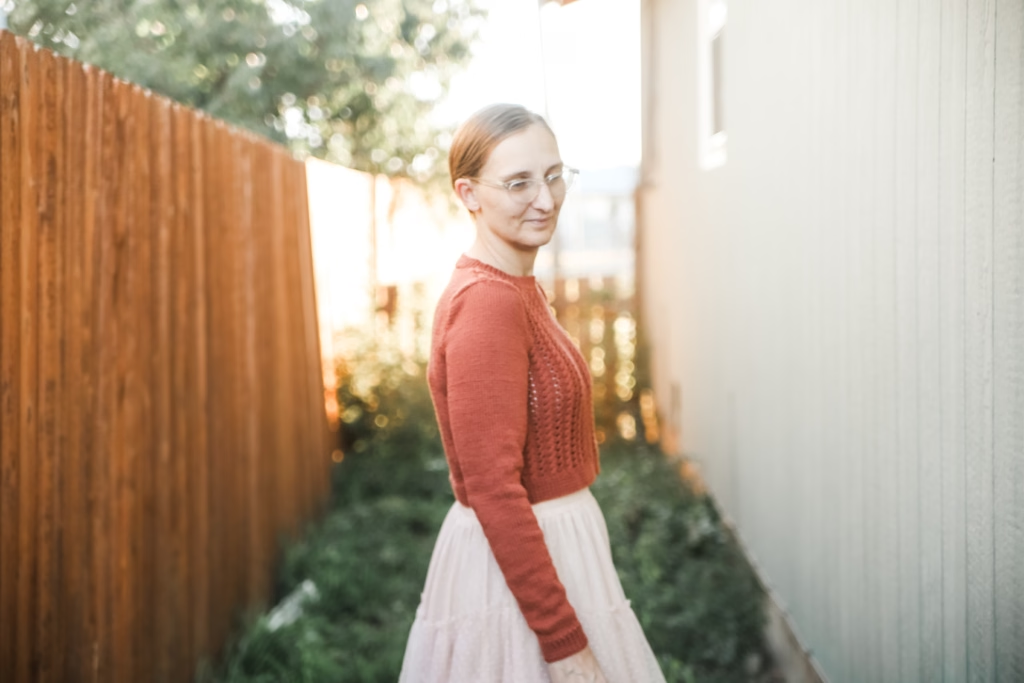
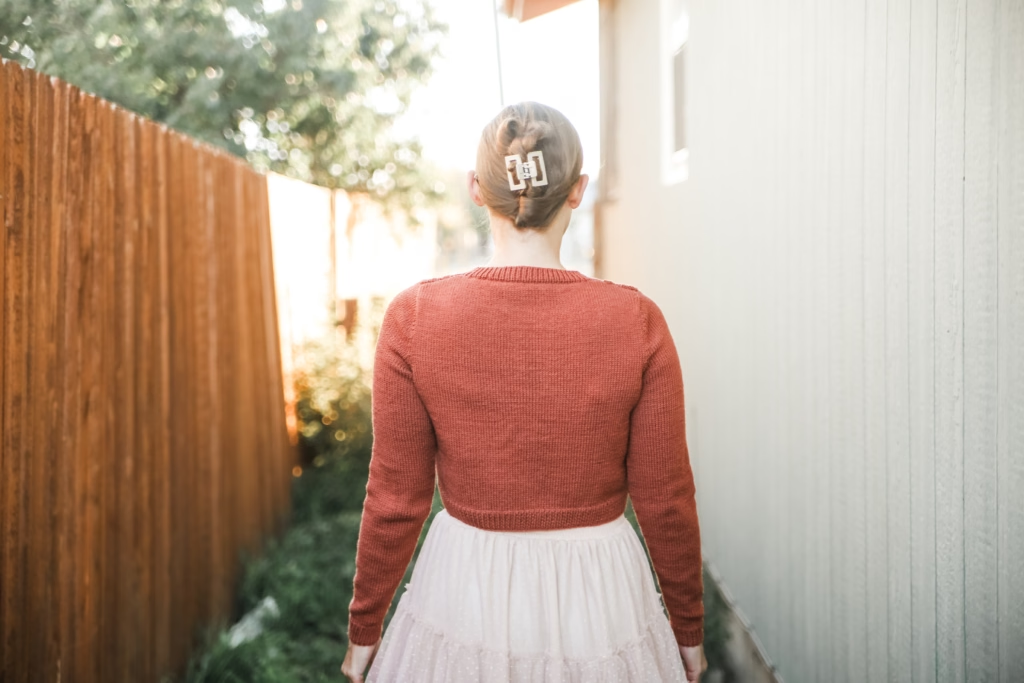
The finished garment is where Cottino really earns its place for me. My Sorek Sweater is extremely comfortable and lightweight to wear.
Cotton can make lovely garments, but the weight of the finished fabric matters. A sweater has a lot more fabric than a small accessory, and I don’t always want that substantial, heavy feeling.
Cottino gave me a lighter option while still including plenty of cotton in the blend. That makes it appealing for sweaters you want to wear as part of an outfit without feeling weighed down.
I also like this kind of fabric for layering. A sweater doesn’t have to be thick and bulky to be useful, especially when you’re wearing it over a dress or pairing it with a skirt.
The merino content is worth remembering if you’re choosing yarn for someone avoiding wool. This is a cotton-and-wool blend, so it won’t fill the same need as a completely wool-free yarn.
Does Lion Brand Cottino Split While You Knit?
Yes, it does have a tendency to split. If you have knitted with cotton before, you may recognize the feeling of catching only part of the strand instead of the whole thing.
That is the main drawback I would mention in this Lion Brand Cottino review. The finished sweater is wonderfully comfortable, but the yarn benefits from paying attention to where your needle tip is going.
If you notice a split stitch, fix it while it’s easy to reach. It’s much quicker to correct one stitch than to discover it several rows later.
A few things can help:
- Make sure you catch the whole strand as you form each stitch.
- Slow down slightly during decreases or other stitches where the needle passes through several loops.
- Try a different needle tip if yours keeps slipping between the plies.
- Check your stitches occasionally instead of waiting until a piece is finished.
Needle preference is personal. A sharper tip can make some stitches easier, but it can also make it easier to poke into the strand, so use the needle that gives you the best control.
The splitting is something I would want to know before buying the yarn. For me, though, it needs to be weighed alongside how comfortable and lightweight the finished sweater is.
How Does Cottino Work for Stitch Definition, Drape, and a Seamed Sweater?
For the adult Sorek Sweater, I wanted a cropped garment with traditional construction: pieces worked flat and joined together, with set-in sleeves.
With this type of sweater, the fabric and the construction work together. The seams define the shape, while the yarn determines how the fabric falls between those seams.
Cottino’s drape makes it an appealing choice for a garment that should move with you. A cropped sweater still needs some softness and movement; a short body doesn’t automatically mean you want stiff fabric.
For stitch definition, take a close look at your swatch in the stitch pattern you plan to use. Cottino has a subtle marled appearance, so the color you choose will also affect how clearly small details show.
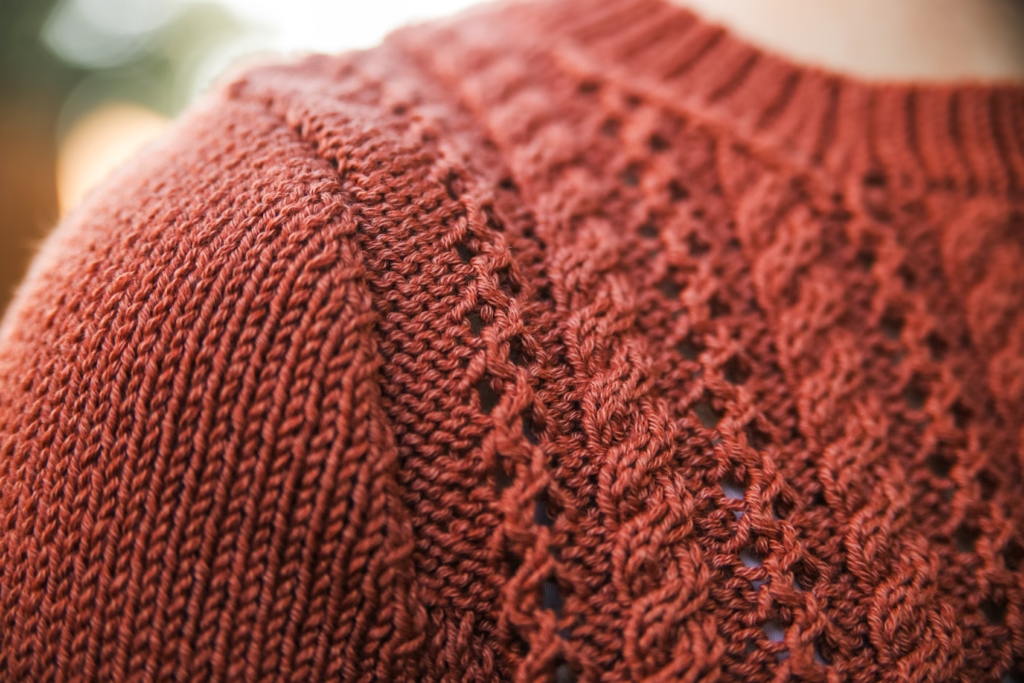
I especially love how Cottino looks with cables. The yarn shows off those twists beautifully, making it an appealing choice when you want a lightweight sweater with a little more texture.
The color you choose does make a difference, though. Some of the higher-contrast marled shades can compete with the cable details, making them harder to see. For a cable-heavy design, I would lean toward a shade with a more subtle marl so the stitchwork stands out.
If you’re unsure about a particular shade, swatch one full cable repeat before committing. That will help you see how the color and texture work together.
When finishing a seamed sweater, block the pieces to the pattern measurements before joining them. Match corresponding edges carefully, and keep the seam tension comfortable rather than pulling it tight.
Because Cottino can split, pay attention while sewing up as well. Catch the intended edge stitches cleanly and check that your finishing yarn isn’t separating as you pull it through.
For Sorek, the combination of a cropped shape and lightweight fabric makes sense for the kind of sweater I enjoy wearing. I want something that works with the rest of my wardrobe and feels comfortable once it’s on.
What Could You Knit With Lion Brand Cottino?
Garments would be my first thought for this yarn: lightweight pullovers, cardigans, tees, and cropped sweaters where comfort and drape matter.
If this Lion Brand Cottino review has you thinking about your next sweater, here are three patterns to look at:
- Sorek Sweater This is the project I used Cottino for: a cropped adult pullover worked flat with set-in sleeves. It’s the place to start if you want to see the yarn used in the garment behind this review.
- Saffron Sweater. A DK raglan option to consider if you prefer that construction. Swatch with Cottino and check the pattern gauge and finished fabric before substituting.
- Miriam Turtleneck. Another cropped sweater idea, originally made with alpaca and silk-mohair yarns held together. Cottino would create a different fabric without that fuzzy halo, so treat this as a substitution to explore through swatching.
Sorek is my tested Cottino project here. The other two give you different sweater styles to consider, with the understanding that matching gauge is only part of choosing a substitute yarn—you also need to like the drape and feel.
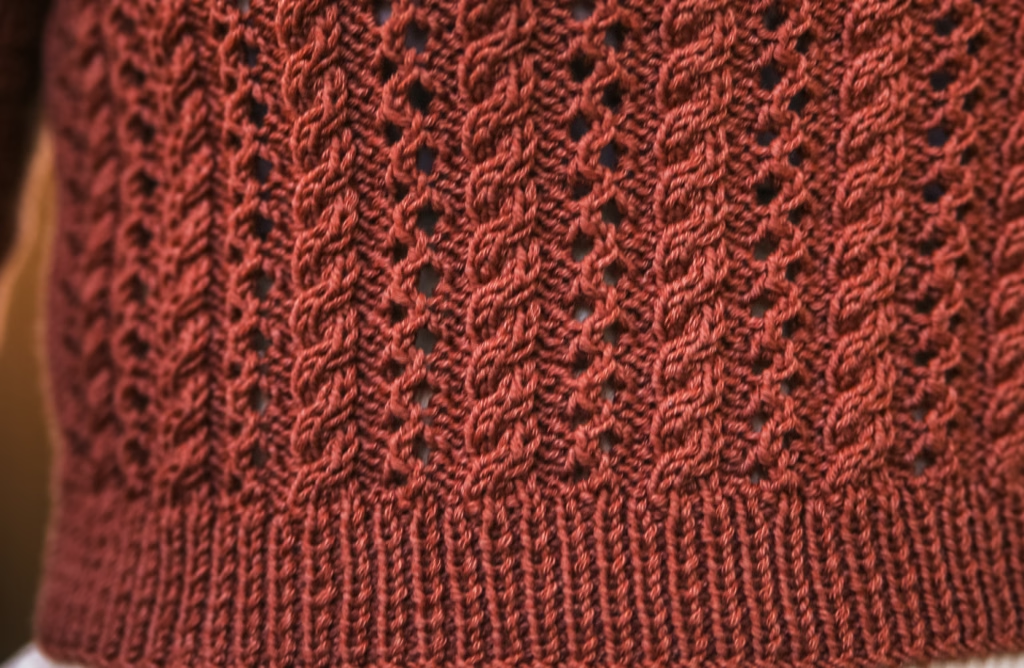
My overall impression of Cottino comes back to wearability. It does split, and I would rather know that going in, but the lightweight comfort of the finished Sorek Sweater is what stands out most to me.
If you enjoy cotton blends and want a lighter sweater fabric, it’s a yarn I would put on your list to swatch.
Have you tried Lion Brand Cottino yet? Tell me what you made—and whether you noticed that cotton-like splitting, too!
This post may contain affiliate links. If you purchase through an affiliate link, I may earn a small commission at no additional cost to you. Thank you for supporting my blog and the free knitting patterns I share!