
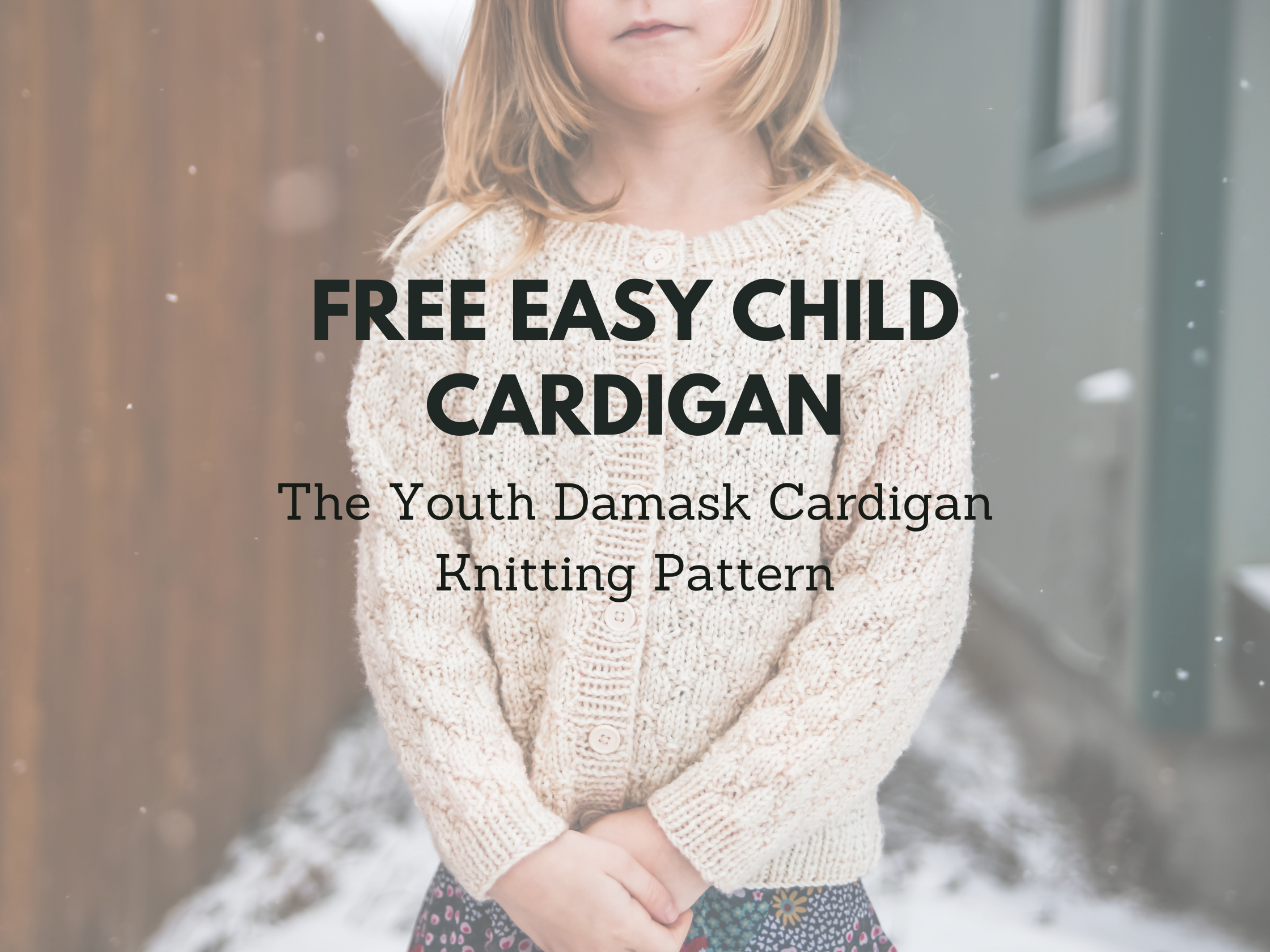
This Free easy child cardigan pattern is the kind of project you reach for when you want a free sweater knitting pattern that’s super fun to knit.
If you’ve ever struggled to find a child cardigan that fits well, looks polished, and doesn’t feel overly complicated, this one checks all the boxes. The sizing is clearly laid out, the construction is straightforward, and the texture keeps things interesting without slowing you down. I designed this Free easy child cardigan pattern to solve that in-between problem where patterns are either too basic or way too fussy—and honestly, it’s one you’ll come back to again and again.

If you’ve been hunting for a go-to cardigan that works for everyday wear and still feels special, this is it. Clean structure, simple shaping, and a timeless texture all come together in a way that just works.
What materials do you need for this Free easy child cardigan pattern?
For this Free easy child cardigan pattern, I kept the materials simple and easy to find so you can get started without overthinking it. The yarn choice is sturdy, soft, and holds the textured stitches beautifully, which really makes the design stand out.
Materials:
Needles:
Gauge:
- 20 sts & 24 rows = 10cm square using size 7 (US) needles
I love using Cascade 220 Superwash here because it gives you that clean stitch definition without being stiff, which is exactly what this textured fabric needs.

It’s one of those setups where everything just works together without a lot of fuss—and that’s always a win.
How is this Free easy child cardigan pattern constructed?
This Free easy child cardigan pattern is worked flat from the bottom up in a drop sleeve style, which makes it approachable even if you don’t knit garments all the time. There’s about 10cm of ease built in, so the fit is comfortable and practical for everyday wear.
If you need help along the way make sure to head over to the Knitting Tutorials page.
The texture pattern is simple to memorize, so once you get going, it becomes a really relaxing knit. The structure keeps things interesting without feeling overwhelming, and the shaping is spaced out in a way that feels manageable.

Take your time with the setup rows, and after that, it really flows. This is one of those patterns where you can actually enjoy the process instead of constantly double-checking instructions.
Looking for more patterns like this Free easy child cardigan pattern?
If you love this style, here are a few more patterns you might want to try next:
- baby damask sweater
- youth wheat cardigan
- damask socks
- damask beanie
- mary cardigan
- judah zipped cardigan
These all have a similar feel—simple structure, wearable design, and just enough texture to keep things interesting.

It’s always nice to have a few go-to patterns that you already know you enjoy knitting.
Youth Damask Cardigan Pattern
Size: 3, 4 (5, 6) 7, 8 (9, 10) 11, 12 (13, 14)
Materials: Approximately 2, 3 (3, 3), 3, 4 (4, 4), 4, 5 (5, 5) skeins of Cascade 220 Superwash, 220 yds / 201 m per 100 g; 5, 6 (6, 6), 7, 7 (7, 8), 8, 8 (9, 9) buttons measuring ½ in / 13 mm; tapestry needle; stitch markers; and waste yarn or stitch holders.
Needle Size: US 6 (4 mm) and US 7 (4.5 mm) straight or circular needles. All pieces are worked flat.
Gauge (tension): 20 sts and 24 rows per 4 × 4 in / 10 × 10 cm after blocking, using US 7 (4.5 mm) needles.
To fit chest circumference: 55, 57 (59, 61), 63, 66 (69, 72), 75, 78 (81, 84) cm / 21¾, 22½ (23¼, 24), 24¾, 26 (27¼, 28¼), 29½, 30¾ (32, 33) in.
METHOD
This drop-shoulder cardigan is worked flat from the bottom up in separate pieces, then seamed. Ribbed neck and front bands are added after the shoulder seams are joined. The cardigan is intended to have approximately 4 in / 10 cm of positive ease, with the amount varying by size.
DAMASK STITCH PATTERN
Row 1 (RS): [k3, p1, k1, p1] across.
Row 2 (WS): [k3, p3] across.
Row 3: Repeat Row 1.
Row 4: Repeat Row 2.
Row 5: Repeat Row 1.
Row 6: [p3, k1, p1, k1] across.
Row 7: [p3, k3] across.
Row 8: Repeat Row 6.
Row 9: Repeat Row 7.
Row 10: Repeat Row 6.
Repeat Rows 1–10.
Each repeat contains 6 stitches. Work the pattern between the selvedge stitches specified in the piece instructions. Where necessary, work complete repeats followed by the beginning of the repeat over the remaining stitches.
During shaping, maintain the established pattern columns rather than restarting the repeat at a newly shaped edge.
BACK
Using the smaller needles, cast on 68, 68 (74, 74), 74, 80 (80, 86), 86, 92 (92, 98) sts.
Work 2.5, 2.5 (3, 3) 3, 3 (3, 3) 3, 3 (3, 3) cms or 1, 1 (1.25, 1.25) 1.25, 1.25 (1.25, 1.25) 1.25, 1.25 (1.25, 1.25) ins of (k1, p1) rib.
Switch to larger size needles.
Work 1 selvedge stitch, the Damask Stitch Pattern over the center stitches, then 1 selvedge stitch. Knit the first and last stitch of every row. Advance one Damask pattern row on every row worked.
Continue until the back measures 24, 24 (25.5, 27), 28.5, 30 (31, 32), 33.5, 35 (36, 37.5) cm / 9½, 9½ (10, 10¾), 11¼, 11¾ (12¼, 12½), 13¼, 13¾ (14¼, 14¾) in from the cast-on edge. Place a removable marker at each edge to mark the bottom of the armhole.
Continue in the established pattern until the back measures 36, 37 (39, 41), 43, 45 (47, 49), 51, 53 (55, 57) cm / 14¼, 14½ (15¼, 16¼), 17, 17¾ (18½, 19¼), 20, 20¾ (21¾, 22½) in from the cast-on edge, ending after a WS row.
SHOULDERS
Bind off 5, 5 (6, 6) 6, 7 (7, 7) 7, 8 (8, 9) sts at the beginning of the next 2 rows.
Bind off 5, 5 (6, 6) 6, 7 (7, 7) 7, 8 (8, 9) sts at the beginning of the next row, work until 9, 10 (10, 10) 10, 10 (10, 12) 11, 12 (11, 12) sts are on the right needle (if you knit left-handed this is your left needle) put remaining sts on a stitch holder or spare yarn.
Turn and bind off 3, 3 (3, 3) 3, 3 (3, 3) 3, 3 (3, 3) sts, work to the end of the row.
Turn and bind off remaining 6, 7 (7, 7) 7, 7 (7, 9) 8, 9 (8, 9) sts
With right side facing, rejoin yarn to the sts on the stitch holder/spare yarn, bind off 30, 28 (30, 30) 30, 32 (32, 34) 36, 36 (38, 38) sts, work remaining 14, 15 (16, 16) 16, 17 (17, 19) 18, 20 (19, 21) sts.
Bind off 5, 5 (6, 6) 6, 7 (7, 7) 7, 8 (8, 9) sts, work to the end of the row.
Turn and bind off 3, 3 (3, 3) 3, 3 (3, 3) 3, 3 (3, 3)sts, work to the end of the row.
Turn and bind off remaining 6, 7 (7, 7) 7, 7 (7, 9) 8, 9 (8, 9) sts
LEFT FRONT (if you knit left-handed this is your right front)
Cast on 32, 32, (35, 35) 35, 38 (38, 41) 41, 44 (44, 47) sts using smaller needle
Work 2.5, 2.5 (3, 3) 3, 3 (3, 3) 3, 3 (3, 3) cms or 1, 1 (1.25, 1.25) 1.25, 1.25 (1.25, 1.25) 1.25, 1.25 (1.25, 1.25) ins of (k1, p1) rib.
Switch to larger size circular needles.
Work 1 selvedge stitch, the Damask Stitch Pattern over the center stitches, then 1 selvedge stitch. Knit the first and last stitch of every row, working partial repeats where necessary.
Continue until the back measures 24, 24 (25.5, 27), 28.5, 30 (31, 32), 33.5, 35 (36, 37.5) cm / 9½, 9½ (10, 10¾), 11¼, 11¾ (12¼, 12½), 13¼, 13¾ (14¼, 14¾) in from the cast-on edge. Place a removable marker at each edge to mark the bottom of the armhole.
Continue until the front measures 31, 31.5 (33.5, 35), 37, 39 (41, 42.5), 44.5, 46 (48, 50) cm / 12¼, 12½ (13¼, 13¾), 14½, 15¼ (16¼, 16¾), 17½, 18 (19, 19¾) in from the cast-on edge, ending after a RS row.
NECK
Next row – Bind off 11, 10 (11, 11) 11, 9 (9, 10) 11, 11 (11, 11) sts, work to end of row [21, 22 (24, 24) 24, 29 (29, 31) 30, 33 (33, 36) sts]
Decrease 1 sts at the neck edge of the next 3, 3 (3, 3) 3, 3 (3, 5) 5, 5 (5, 4) rows. [18, 19 (21, 21), 21, 26 (26, 26), 25, 28 (28, 32) sts]
Decrease 1 sts at neck edge every right-side row 2, 2 (2, 2) 2, 5 (5, 3) 3, 3 (4, 5) times [16, 17 (19, 19), 19, 21 (21, 23), 22, 25 (24, 27) sts]
Continue without further neck decreases until the front measures 36, 37 (39, 41), 43, 45 (47, 49), 51, 53 (55, 57) cm / 14¼, 14½ (15¼, 16¼), 17, 17¾ (18½, 19¼), 20, 20¾ (21¾, 22½) in from the cast-on edge, ending after a WS row.
SHOULDERS
Bind off 5, 5 (6, 6) 6, 7 (7, 7) 7, 8 (8, 9) sts, work to end of row
Work the next row without shaping
Bind off 5, 5 (6, 6), 6, 7 (7, 7), 7, 8 (8, 9) sts at the beginning of the next row, then work to the end.
Work the next row without shaping
Bind off remaining 6, 7 (7, 7) 7, 7 (7, 9) 8, 9 (8, 9) sts
RIGHT FRONT (if you knit left-handed this is your left front)
Cast on 32, 32, (35, 35) 35, 38 (38, 41) 41, 44 (44, 47) sts using smaller needle
Work 2.5, 2.5 (3, 3) 3, 3 (3, 3) 3, 3 (3, 3) cms or 1, 1 (1.25, 1.25) 1.25, 1.25 (1.25, 1.25) 1.25, 1.25 (1.25, 1.25) ins of (k1, p1) rib.
Switch to larger size circular needles.
Work 1 selvedge stitch, the Damask Stitch Pattern over the center stitches, then 1 selvedge stitch. Knit the first and last stitch of every row, working partial repeats where necessary.
Continue until the back measures 24, 24 (25.5, 27), 28.5, 30 (31, 32), 33.5, 35 (36, 37.5) cm / 9½, 9½ (10, 10¾), 11¼, 11¾ (12¼, 12½), 13¼, 13¾ (14¼, 14¾) in from the cast-on edge. Place a removable marker at each edge to mark the bottom of the armhole.
Continue until the front measures 31, 31.5 (33.5, 35), 37, 39 (41, 42.5), 44.5, 46 (48, 50) cm / 12¼, 12½ (13¼, 13¾), 14½, 15¼ (16¼, 16¾), 17½, 18 (19, 19¾) in from the cast-on edge, ending after a WS row.
NECK
Next row – Bind off 11, 10 (11, 11) 11, 9 (9, 10) 11, 11 (11, 11) sts, work to end of row [21, 22 (24, 24) 24, 29 (29, 31) 30, 33 (33, 36) sts]
Decrease 1 sts at the neck edge of the next 3, 3 (3, 3) 3, 3 (3, 5) 5, 5 (5, 4) rows. [18, 19 (21, 21), 21, 26 (26, 26), 25, 28 (28, 32) sts]
Decrease 1 sts at neck edge every right-side row 2, 2 (2, 2) 2, 5 (5, 3) 3, 3 (4, 5) times [16, 17 (19, 19) 19, 21 (21, 23) 22, 25 (24, 27) sts]
Continue without further neck decreases until the front measures 36, 37 (39, 41), 43, 45 (47, 49), 51, 53 (55, 57) cm / 14¼, 14½ (15¼, 16¼), 17, 17¾ (18½, 19¼), 20, 20¾ (21¾, 22½) in from the cast-on edge, ending after a RS row.
SHOULDERS
Bind off 5, 5 (6, 6) 6, 7 (7, 7) 7, 8 (8, 9) sts, work to end of row
Work the next row without shaping
Bind off 5, 5 (6, 6), 6, 7 (7, 7), 7, 8 (8, 9) sts at the beginning of the next row, then work to the end.
Work the next row without shaping
Bind off remaining 6, 7 (7, 7) 7, 7 (7, 9) 8, 9 (8, 9) sts
SLEEVES (MAKE 2)
Cast on now 38, 38 (38, 38) 38, 38 (38, 44) 44, 44 (44, 44) sts on smaller needles
Work 2.5, 2.5 (3, 3) 3, 3 (3, 3) 3, 3 (3, 3) cms or 1, 1 (1.25, 1.25) 1.25, 1.25 (1.25, 1.25) 1.25, 1.25 (1.25, 1.25) ins of (k1, p1) rib.
Switch to larger size circular needles
After the ribbing, change to the larger needles and work 4 rows of the Damask Stitch Pattern between two selvedge stitches, knitting the first and last stitch of every row.
Increase Row (RS): K1, M1L, work in established pattern to the last st, M1R, k1. [2 sts increased]
Work the Increase Row on every RS row 0, 0 (0, 0), 0, 4 (4, 0), 0, 2 (5, 5) times.
Then work the Increase Row every fourth row 9, 10 (11, 12), 13, 11 (12, 15), 16, 15 (14, 15) times. Work intervening rows in pattern.
Maintain the established pattern columns and incorporate the increased stitches into the pattern, working partial repeats where necessary.
[56, 58 (60, 62), 64, 68 (70, 74), 76, 78 (82, 84) sts]
Continue in the Damask Stitch Pattern until the sleeve measures 24, 26.5 (28, 29), 29, 29.5 (31.5, 33), 34.5, 38 (39, 40.5) cm / 9½, 10½ (11, 11½), 11½, 11½ (12½, 13), 13½, 15 (15¼, 16) in from the cast-on edge. Bind off all stitches, leaving a tail for seaming if desired.
NECK
Join both shoulder seams, using yarn on a tapestry/yarn needle.
With right side facing and smaller needles pick up and knit 11, 11 (12, 12) 12, 10 (10, 11) 12, 12 (12, 12) sts along right from bind off edge,
11, 11 (11, 12) 12, 12 (12, 14) 14, 14 (14, 14) sts up right front of neck,
36, 34 (36, 36), 36, 38 (38, 40), 42, 42 (44, 44) sts around the back neckline, including the shaped sections at each side
11, 11 (11, 12) 12, 12 (12, 14) 14, 14 (14, 14) sts up left front and side of neck,
11, 11 (12, 12) 12, 10 (10, 11) 12, 12 (12, 12) sts along left from bind off edge.
[80, 78 (82, 84), 84, 82 (82, 90), 94, 94 (96, 96) sts]
Work 1×1 ribbing for 2, 2 (2.5, 2.5), 2.5, 2.5 (2.5, 2.5), 2.5, 2.5 (2.5, 2.5) cm / ¾, ¾ (1, 1), 1, 1 (1, 1), 1, 1 (1, 1) in. Bind off in pattern.
FRONT RIB EDGES
LEFT FRONT
Pick up evenly along the complete front opening, including the short end of the neckband 61, 64 (69, 74) 75, 81 (87, 86) 93, 100 (105, 113) sts along the edge with the smaller sized circular needles.
Work 6 rows of rib (k1, p1).
Bind off in established rib pattern.
RIGHT FRONT EDGE
Pick up and knit 61, 64 (69, 74) 75, 81 (87, 86) 93, 100 (105, 113) sts along the edge with the smaller sized circular needles.
Work 2 rows in k1p1 ribbing
Buttonhole Row: Work 3 sts in established ribbing, k2tog, yo, then [work 11, 9 (10, 11), 9, 10 (11, 9), 10, 11 (10, 11) sts in established ribbing, k2tog, yo] a total of 4, 5 (5, 5), 6, 6 (6, 7), 7, 7 (8, 8) times. Work the final 4 sts in established ribbing.
5, 6 (6, 6) 7, 7 (7, 8) 8, 8 (9, 9) buttonholes made.
Work 3 rows in k1p1 ribbing
Bind off in established rib pattern.
FINISHING
Block the pieces to the intended measurements. Center each sleeve’s bound-off edge at the corresponding shoulder seam and sew it into the armhole between the front and back markers. Sew the sleeve and side seams using mattress stitch.
Sew the buttons to the wearer’s left front band opposite the buttonholes. Weave in all ends and lightly block the bands and seams as needed.
ABBREVIATIONS
K – knit
K2tog -knit 2 stitches together
M1L – Insert the left needle under the strand that runs between two stitches from front to back, then knit this strand through the back loop
M1R – Insert the left needle under the strand that runs between two stitches from back to front, then knit this strand
P – purl
PM – place marker
RS — right side
SM – slip marker
SSK – slip, slip, knit the slipped sts together
st/sts — stitch/stitches
WS — wrong side
YO – yarn over

If you end up making this, I’d love to hear how it goes for you. Leave a comment and let me know what size you made or who you’re knitting it for!
This post may contain affiliate links, which means I may earn a small commission at no extra cost to you if you make a purchase through them.
I love this sweater. It is so elegant looking. In looking through the directions, I see instructions for two left fronts and no right front. Is there a correction listed somewhere?