
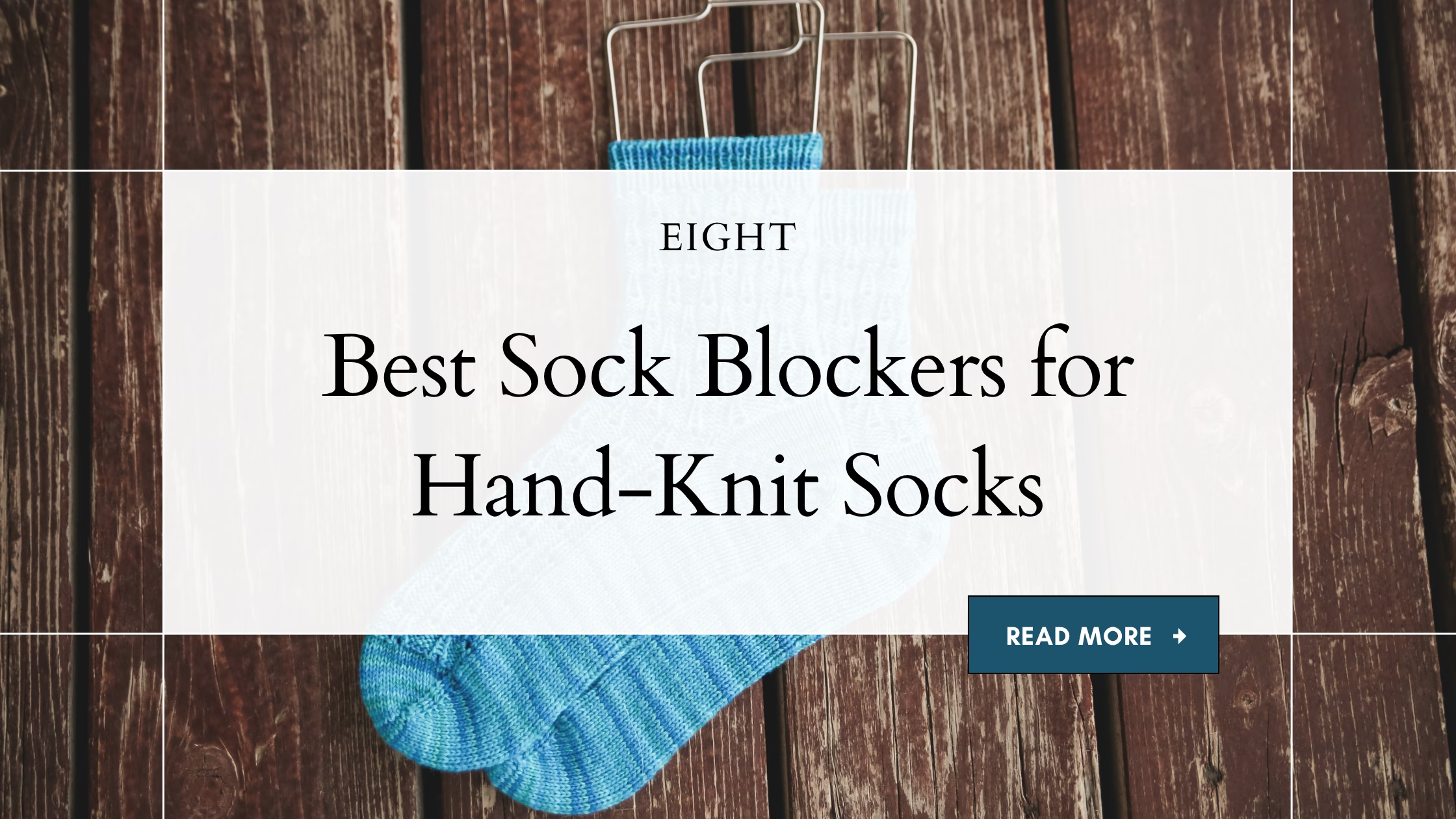
The best sock blockers make that final step of finishing your hand-knit socks ridiculously satisfying. After all those tiny stitches, heel turns, gussets, and carefully shaped toes, a good pair of sock blockers helps smooth everything out, open up your stitch pattern, and give your finished socks that polished “yes, I absolutely made these!” look.
But sock blockers are definitely not all the same. You’ll find sturdy plastic styles, pretty wooden blockers, airy stainless-steel options, acrylic forms, and adjustable blockers that can handle several foot sizes. The right choice depends on how often you block socks, how quickly you want them to dry, how much storage space you have, and whether you knit lots of different sizes.
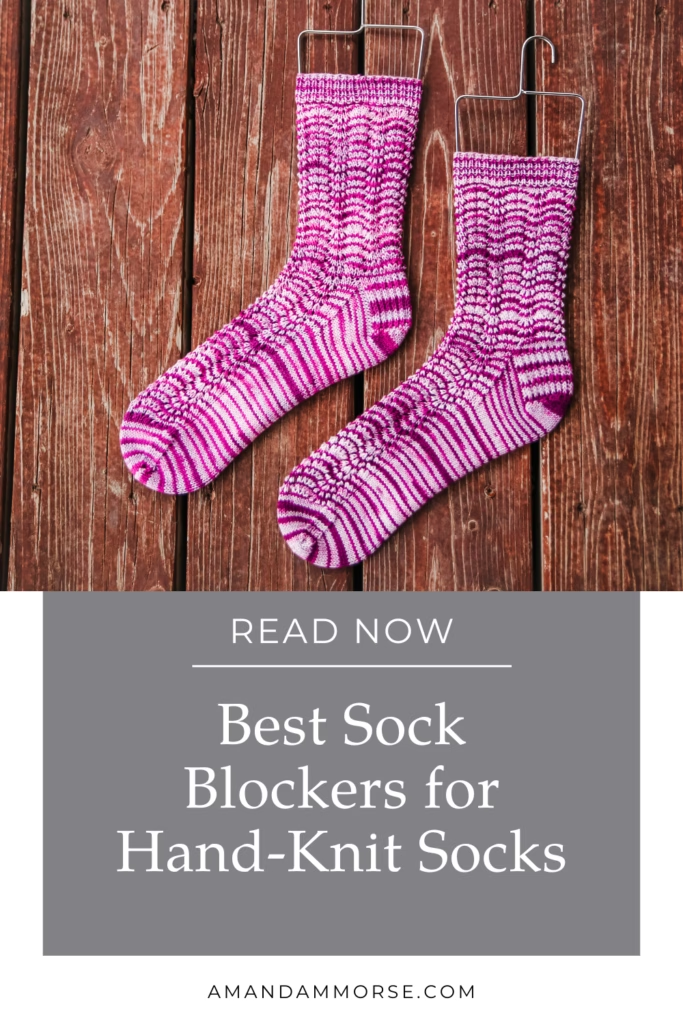
If you knit socks like the Jacob Socks, Lydia Socks, Peace Socks, Simone Ankle Socks, or Anna Socks, having a reliable blocker nearby makes finishing your project so much easier.
And yes—these work for toe-up socks, too! Sock blockers don’t really care which direction you knit. Once your sock is finished and wet, you simply ease it over the blocker, line up the heel and toe, and allow it to dry in shape. Knit Picks recommends choosing a blocker that matches your finished sock dimensions and lining the heel and toe up correctly before drying.
Here are my picks for the best sock blockers for different kinds of sock knitters.
What Are the Best Sock Blockers for Everyday Use?
Knit Picks Sock Blockers
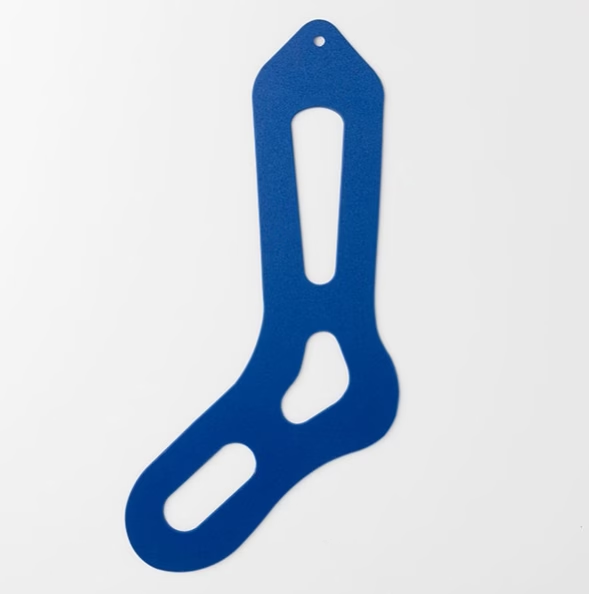
If I wanted one uncomplicated pair of sock blockers that I could use over and over again, the classic Knit Picks Sock Blockers would be very high on my list.
These are made from sturdy plastic that doesn’t absorb moisture, which means you don’t have to worry about the blocker itself soaking up water or warping after repeated use. They’re sold in pairs and currently come in three foot lengths: approximately 8.25 inches, 9.125 inches, and 10.125 inches.
That non-absorbent construction is especially handy if you wash and re-block your handmade socks regularly. They’re also wonderfully low-maintenance—there aren’t moving pieces to adjust or wooden surfaces to baby.
They may not have the heirloom-tool look of decorative wooden blockers, but if you want something practical, durable, and easy to reach for every wash day, that simplicity is exactly what makes them so useful.
The Pros:
- Sturdy plastic construction
- Won’t absorb moisture
- Won’t warp from normal wet blocking
- Available in three sizes
- Sold as a pair
- Easy to clean and reuse
- Great everyday option for frequent sock knitters
The Cons:
- Each pair is a fixed size
- You may need more than one set if you knit several shoe sizes
- Solid plastic provides less open-air space than wire-style blockers
Find the Knit Picks Sock Blockers here.
What Are the Best Adjustable Sock Blockers?
Knit Picks Adjustable Sock Blockers
If your sock knitting ranges from “tiny gift socks for my sister” to “giant cozy socks for someone with much bigger feet than mine,” adjustable blockers make a whole lot of sense.
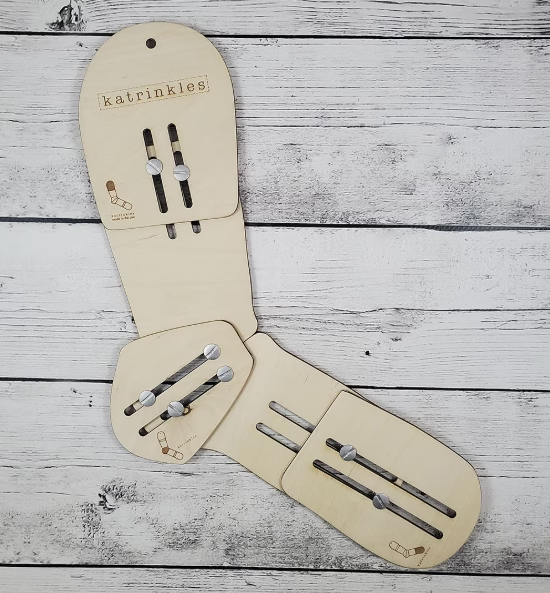
The Knit Picks Adjustable Sock Blockers adjust at the leg, foot, and heel instead of locking you into one permanent size. The current adult version adjusts from approximately a women’s size 4 through a men’s size 13, giving one pair of blockers a very wide usable range. They’re sold as a pair that you assemble, with pictogram assembly instructions engraved into the pieces.
This is the option I’d especially consider if you knit socks as gifts. Instead of storing small, medium, and large fixed blockers, you can alter the same pair to suit different finished measurements.
The adjustable design also makes these particularly appealing for toe-up knitters because you can set the blocker to suit the dimensions of your completed sock rather than trying to force your freshly knitted foot onto a blocker that is just a little too long or wide.
The trade-off is that adjustable blockers take a bit more setup than a simple fixed form. Still, the versatility more than makes up for that if you regularly knit multiple sizes.
The Pros:
- Adjustable at the leg, foot, and heel
- Covers a very broad range of adult sock sizes
- Great for gift knitters
- Reduces the need to own multiple fixed-size blockers
- Useful if your sock patterns produce different foot lengths
The Cons:
- Requires assembly
- More pieces than a basic fixed blocker
- Takes a little longer to set up before blocking
Find the Knit Picks Adjustable Sock Blockers here.
What Are the Best Metal Sock Blockers for Fast Drying?
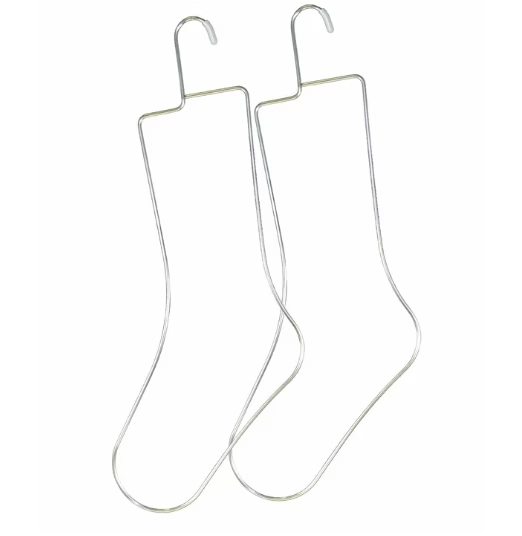
Bryson Stainless Steel Sock Blockers
For anyone whose biggest complaint about blocking is, “Why are these socks STILL wet?” I really like the idea of an open metal blocker.
The Bryson Stainless Steel Sock Blockers available through Jimmy Beans Wool have a slim, open wire design specifically intended to provide plenty of airflow around your wet socks. They also have a hook at the top so you can hang the socks while they dry. Jimmy Beans Wool currently lists them in three sizes.
That open construction is the big selling point here. Instead of having a broad solid surface sitting directly behind wet knitting, much of the sock remains exposed to circulating air.
They’re also a smart storage choice. A slim wire blocker takes up very little visual or physical space compared with a chunky solid form, especially if you can hang your pair from a hook in your craft room or laundry area.
The downside? Wire blockers don’t provide the same broad, completely flat surface as solid blockers. If photographing lace or colorwork in a perfectly stretched presentation is your number-one goal, you may prefer a solid form. For routine blocking and drying, however, that airflow is hard to beat.
The Pros:
- Stainless-steel construction
- Very open design for excellent airflow
- Built-in hook for hanging
- Available in multiple sizes
- Slim profile is easy to store
- Excellent choice for frequent washing
The Cons:
- Fixed sizes
- Less solid surface area behind the knitting
- Wire construction gives a different finished presentation than solid forms
Find the Bryson Stainless Steel Sock Blockers at Jimmy Beans Wool here.
What Are the Best Sock Blockers If You Knit Several Sizes?
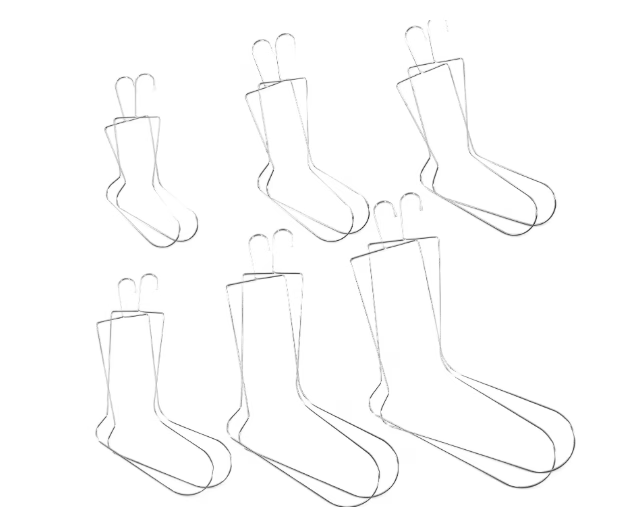
UPTTHOW Stainless Steel Sock Blocker Set
Maybe you don’t want an adjustable blocker at all. Maybe you’d rather pull the correct size off the hook and be done.
In that case, a multi-size set is extremely convenient.
The UPTTHOW Sock Blockers currently sold on Amazon include three pairs in three adult sizes. They’re made from stainless steel and are designed with an open hanging style.
I like this kind of set for knitters who routinely make socks for several family members because there’s no stopping to reconfigure a blocker between projects. Pick the size that most closely matches your finished sock, slide the sock on, and let it dry.
Because you get six blockers in total, storage requires a little more room than owning one adjustable pair. Fortunately, the open metal forms are relatively slim and can be hung together rather than stacked across an entire shelf.
The Pros:
- Three pairs included
- Three adult sizes
- Stainless-steel construction
- Open shape encourages airflow around the sock
- Hangable
- No adjustments required between sizes
- Useful for households with several sock wearers
The Cons:
- Six individual blockers require more storage than one pair
- Fixed sizing isn’t as customizable as an adjustable blocker
- May be more than you need if you only knit one sock size
Find the UPTTHOW Stainless Steel Sock Blocker Set on Amazon here.
What Are the Best Acrylic Sock Blockers?
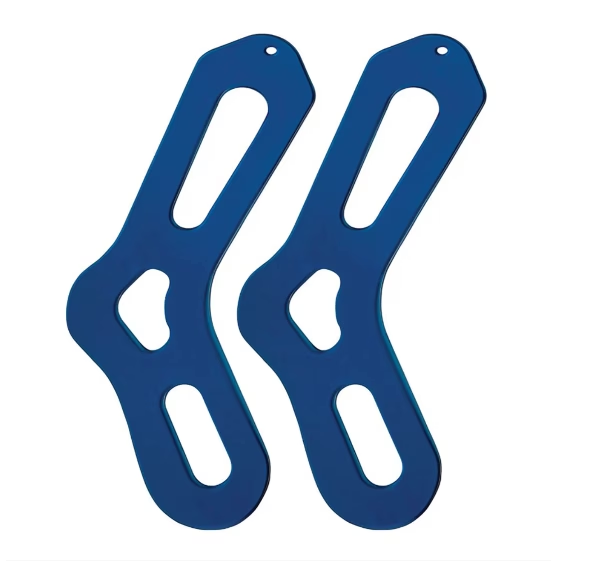
KnitPro Aqua Sock Blockers
If you like the lightness of plastic but want something a little different, acrylic sock blockers are worth a look.
The KnitPro Aqua Sock Blockers sold through Amazon are lightweight acrylic forms. Their lightweight construction also makes them easy to carry or tuck into your knitting supplies when traveling.
Acrylic gives you a moisture-resistant option without the concerns that can come with repeatedly wetting untreated wood. That makes this style appealing if you block often or simply don’t want to think much about maintenance.
I also like acrylic blockers for knitters who want a solid form for smoothing stitches while still keeping the blocker itself relatively lightweight.
They aren’t adjustable, though, so—as with other fixed blockers—be sure you’re choosing a size that suits the actual finished dimensions of your socks rather than stretching the knitting to fit the form.
The Pros:
- Lightweight acrylic
- Easy to travel with
- Solid surface supports smooth blocking
- Simple one-piece design
- Low-maintenance material
The Cons:
- Fixed sizing
- Less airflow than an open wire blocker
- You may need multiple sizes for different recipients
Find KnitPro Aqua Sock Blockers on Lovecrafts here.
What Are the Best Wooden Sock Blockers?
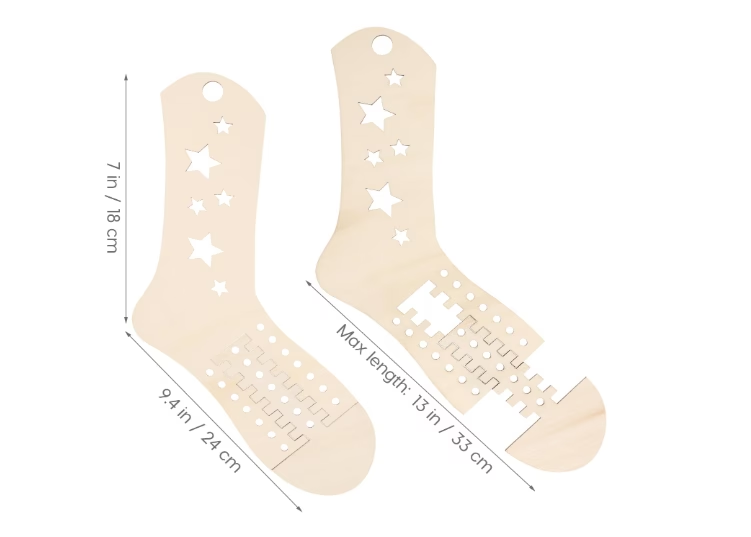
PACKOVE Wooden Sock Blockers
If you love knitting tools that are both useful and pretty enough to leave sitting out in your craft room, wooden sock blockers are hard to resist.
The PACKOVE Wooden Sock Blockers are a nice option for knitters who want the traditional look and feel of wood without anything overly complicated. The wood has a smooth, finished surface and edges designed to avoid catching or snagging your hand-knit socks.
That makes them especially nice when you’ve just spent hours working with delicate sock yarn and the very last thing you want is a rough edge pulling at one of those stitches!
Wooden blockers also look fantastic in finished-project photos. If you photograph your Jacob Socks, Lydia Socks, or other hand-knit socks for your blog or social media, the natural wood gives everything a warm, handmade feel.
The main thing to remember is that wood needs a little more care than plastic or metal. After blocking wet socks, let both your socks and the blockers dry thoroughly before putting them away.
The Pros:
- Smooth wooden construction
- Edges are designed not to snag yarn
- Attractive for finished-project photography
- Sturdy, simple design
- No complicated assembly
- Gives socks a nice, defined shape while drying
The Cons:
- Wood requires a little more care around moisture
- Not as much airflow as an open metal blocker
- Fixed blockers are less versatile than fully adjustable styles
- Should be dried completely before storing
Find the PACKOVE Wooden Sock Blockers on Amazon here.
What Are the Best Sock Blockers for Small Storage Spaces?
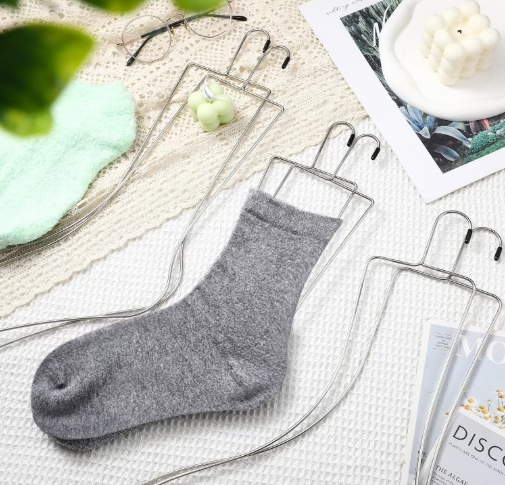
Newtay Stainless Steel Sock Blockers
Craft storage fills up alarmingly fast. One minute you have a respectable yarn basket. The next, there’s yarn under the bed and interchangeable needles living in a cookie tin.
So if storage matters, slim metal blockers are one of the easiest styles to live with.
The Newtay Stainless Steel Sock Blockers on Amazon are sold as three pairs in small, medium, and large sizes. The listing specifically describes them as rust-resistant and space-saving.
Their thin wire-style profile means several forms can be stored together without taking up the kind of shelf space that multiple solid forms might require.
I’d choose these over adjustable blockers if you really don’t want to fiddle with moving components. You get the convenience of several sizes while keeping the design wonderfully straightforward.
The Pros:
- Includes small, medium, and large pairs
- Stainless steel
- Rust-resistant construction
- Slim, space-saving design
- Great airflow
- Simple fixed forms
The Cons:
- Still requires storing six blockers
- Sizes aren’t infinitely adjustable
- Not as decorative as wooden blockers
Find the Newtay Stainless Steel Sock Blockers on Amazon here.
Are Adjustable Wooden Sock Blockers Worth It?
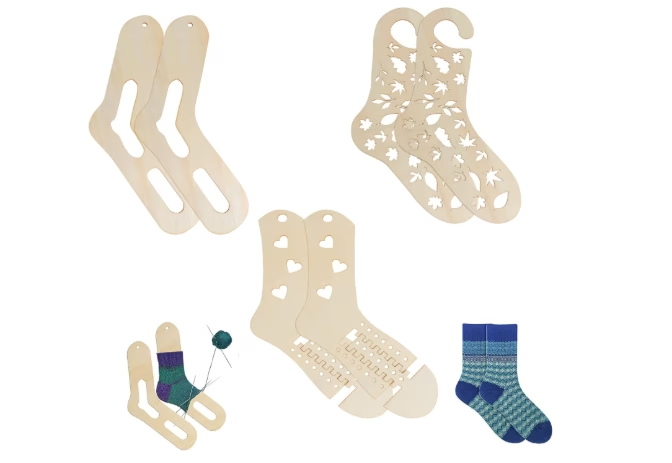
COSYOO Adjustable Wooden Sock Blockers
If you like the appearance of wood but don’t want to commit to a single fixed foot length, an adjustable wooden option gives you a little of both worlds.
The COSYOO Wooden Sock Blockers listed on Amazon include an adjustable design that can extend for larger socks or fold back for smaller sizes. The listing also points to the compact design as useful for saving storage space.
That’s a particularly interesting combination if you knit for several people but don’t want your craft closet filled with individual blocker sets.
I would choose these primarily for versatility rather than maximum drying speed. An open stainless-steel frame still has the advantage when unrestricted airflow is the priority, but an adjustable wooden form offers far more flexibility than a fixed wooden blocker.
The Pros:
- Wooden construction
- Adjustable sizing
- Can accommodate different sock lengths
- Compact compared with owning several fixed pairs
- Nice choice for gift knitters
The Cons:
- More moving pieces than a fixed form
- Wood requires more care around repeated moisture
- Doesn’t offer the same wide-open airflow as metal wire blockers
Find the COSYOO Adjustable Wooden Sock Blockers on Amazon here.
How Do You Choose the Best Sock Blockers?
When you’re comparing the best sock blockers, think about how you actually knit—not just which blocker looks prettiest sitting next to your yarn stash.
If you almost always knit socks for yourself, one fixed pair in your usual size may be all you ever need. The classic Knit Picks plastic blockers are particularly practical because the material doesn’t absorb moisture or warp during ordinary blocking use.
If you knit gifts or make several sizes, an adjustable blocker can save a surprising amount of space. Knit Picks’ adjustable version spans approximately women’s size 4 through men’s size 13, making it especially versatile.
For fast drying, choose an open metal form. Jimmy Beans Wool specifically notes the airflow advantage of the Bryson stainless-steel blockers.
For easy storage, look for slim wire blockers or one adjustable pair rather than several bulky solid forms.
For project photography, I tend to prefer a solid plastic, acrylic, or wooden surface because it can give the entire sock a clear, defined silhouette.
And whatever style you choose, avoid sizing up just because you want a dramatically stretched sock. The goal is to shape and smooth your knitting—not stretch it into submission.
Do Sock Blockers Work for Toe-Up Socks?
Absolutely.
Whether you knit cuff-down or toe-up doesn’t change how a finished sock sits on a blocker. Once your knitting is complete, you’re working with the finished shape of the sock.
Knit Picks’ blocking instructions recommend sliding the wet sock onto an appropriately sized blocker just as you would put it on your foot, making sure the toe and heel sit in the correct places.
That means your toe-up favorites can be blocked just as easily as cuff-down socks.
The bigger consideration is fit. If your toe-up pattern lets you customize foot length precisely, an adjustable blocker may be especially nice because you can configure the blocker around your finished measurements instead of choosing the nearest standard size.
Which Sock Blocker Would I Choose?
For most knitters, I think the Knit Picks Plastic Sock Blockers are the easiest all-around choice. They’re straightforward, moisture-resistant, durable, and available in three useful sizes.
If you regularly knit socks for several people, I’d jump to the Knit Picks Adjustable Sock Blockers because the sizing range is hard to beat.
And if your priority is getting wet socks dried and back into your sock drawer as quickly as possible, I’d go with the Bryson Stainless Steel Sock Blockers for that wonderfully open construction.
Whichever version you choose, a sock blocker is one of those little tools that feels unnecessary right up until the first time you slide a slightly rumpled handmade sock onto one and watch all those beautiful stitches settle into place.
Then suddenly you’re wondering why you waited so long.
What Socks Can You Make to Use With Your New Sock Blockers?
Now you need something to block!
If your new sock blockers are sitting there looking suspiciously empty, pick your next pair from one of these sock knitting patterns:
Which type of sock blocker do you prefer—plastic, wood, acrylic, metal, or adjustable? Tell me in the comments! And if you’ve discovered a clever sock-blocking trick, I definitely want to hear that too.
Affiliate disclaimer: This post may contain affiliate links. If you make a purchase through one of these links, I may earn a small commission at no additional cost to you. Thank you for supporting the blog!
Product availability, sizing, and retailer listings can change, so double-check the current product details before ordering.
Thank you so much for comparing all these different types of Sock blockers, so easy for me (and all who read your comments) to choose what is best for every knitter.
I’m a sock knitter but also have made your dishcloths (Dathan, Jacob, Judah and great Damask) which are great to practice a pattern, then apply the pattern to the socks as the Damask dishcloth which is beautiful, I I still have to make the Damask socks.
Thank you for sharing your knowledge and patterns.