
If you have ever stood in the yarn aisle wondering whether wool or acrylic is the better choice, you are definitely not alone. When it comes to wool vs acrylic yarn, both fibers have plenty to offer, but they behave very differently once you start knitting. The right choice usually comes down to what you are making, how much you want to spend, how you plan to wash the finished project, and who will ultimately be wearing or using it.
Wool is warm, springy, breathable, and wonderfully suited to cozy knits, while acrylic yarn is affordable, easy to care for, and available in an enormous range of colors and styles. Neither one is automatically “better.” The best yarn is the one that works best for your particular project.
Choosing between wool and acrylic becomes much easier once you know what each fiber does well. A yarn that is perfect for a warm winter hat may not be the yarn you want for a child’s everyday sweater that needs frequent washing.
There are also differences in warmth, texture, elasticity, durability, price, and care that can completely change how your finished knitting feels and performs.
So, before you cast on, let’s compare wool and acrylic yarn side by side.
What Is the Difference Between Wool and Acrylic Yarn?
The biggest difference between wool and acrylic yarn is the fiber itself. Wool is a natural animal fiber, most commonly spun from sheep’s fleece, while acrylic is a synthetic fiber manufactured to create a soft, lightweight yarn that can mimic some of the qualities of wool.
Wool fibers naturally have elasticity and crimp, which gives many wool yarns that wonderfully springy feeling knitters love. That bounce can help stitches settle neatly beside one another and makes wool especially enjoyable for projects with ribbing, cables, colorwork, and other textured stitch patterns.
Acrylic yarn tends to have less natural elasticity, although the feel varies quite a bit from one yarn to another. Modern acrylics can be incredibly soft, and there are plenty of options that work beautifully for garments, blankets, accessories, and children’s knits.
If you already know you want to work with wool, take a look at my Best Wool Yarn Roundup for some of my favorite options. If easy-care synthetic yarn sounds more practical for your project, my Best Acrylic Yarn Roundup will help you narrow down your choices.

The fiber content is only the beginning of the story. How a yarn is spun, how many plies it has, and the way it has been finished can all affect how it feels and behaves.
That is why you can pick up two wool yarns—or two acrylic yarns—and discover they feel completely different in your hands.
Is Wool or Acrylic Yarn Warmer?
In most cases, wool is the better choice when warmth is your top priority. Wool fibers trap pockets of air, creating insulation without requiring an especially heavy finished fabric.
Wool is also breathable, which makes it particularly useful for garments and accessories meant to keep you comfortable in cold weather. A wool hat, sweater, or pair of mittens can feel wonderfully cozy while still allowing moisture and heat to move through the fabric.
Acrylic can also make very warm projects, particularly when it is knitted at a dense gauge. However, because it is a synthetic fiber, it does not regulate temperature in quite the same way wool does.
For a winter accessory that will spend plenty of time outside, I often look toward wool or a wool blend. For a cozy indoor blanket, everyday sweater, or accessory where simple care is more important, acrylic can be a fantastic choice.
Is Wool or Acrylic Yarn Easier to Wash?
This is one area where acrylic yarn often wins.
Many acrylic yarns are machine washable, and quite a few can also go into the dryer. That makes acrylic especially convenient for projects that are likely to be washed regularly, including children’s sweaters, baby blankets, household knits, and everyday accessories.
Wool requires a little more attention. Some wool yarns need to be hand washed and laid flat to dry because heat, moisture, and agitation can cause the fibers to felt.
Superwash wool is the exception. It has been treated so the fibers are less likely to felt, which makes it much easier to care for than untreated wool. Always follow the washing instructions printed on your particular yarn label, because care recommendations can vary even among yarns with similar fiber content.

If you are knitting something for a gift, it is worth thinking about care before you choose your yarn. A beautiful hand-wash-only wool sweater may not be the best match for someone who wants to toss absolutely everything into the washing machine.
On the other hand, if the recipient loves wool and does not mind caring for handknits carefully, that extra bit of maintenance may be completely worthwhile.
Which Is Better for Knitting: Wool or Acrylic Yarn?
For knitting itself, wool has a few characteristics that make it especially enjoyable to work with.
Its natural elasticity gives stitches a little bounce, and many wool yarns have enough grip to keep stitches from slipping around too much on the needles. That can be particularly helpful when working cables, stranded colorwork, ribbing, or other stitch patterns where stitch definition matters.
Wool also tends to respond beautifully to blocking. Once your finished knitting is washed and shaped, stitches can relax and settle into place, giving the fabric a wonderfully polished appearance.
Acrylic behaves differently, but that certainly does not make it difficult to knit. In fact, a smooth acrylic yarn can be a great option for newer knitters because it is usually affordable, widely available, and easy to unravel if you need to redo a section.
If you are making something that needs to hold its shape very firmly, check the yarn carefully before committing to a large project. Some acrylics have plenty of bounce, while others create a softer, more drapey fabric.
Is Wool or Acrylic Yarn More Affordable?
Acrylic yarn is generally the more budget-friendly option.
Because acrylic is manufactured rather than grown and processed as an animal fiber, it can often be produced at a much lower cost. You can also find acrylic yarn in large skeins, which is helpful when knitting yarn-hungry projects such as blankets, oversized sweaters, or several matching items.
Wool can range quite a bit in price depending on the breed of sheep, how the wool was processed, where it was produced, and whether other fibers have been blended into the yarn.
That does not mean you need to avoid wool when knitting on a budget. Smaller wool projects such as hats, mittens, cowls, and other accessories are a wonderful way to enjoy the fiber without purchasing a sweater quantity of yarn.
A wool blend can also give you some of wool’s warmth and elasticity while keeping the price—and sometimes the care requirements—a little more manageable.
Does Wool or Acrylic Yarn Feel Softer?
This one really depends on the specific yarn.
Some wool is unbelievably soft, while other wool has a more rustic texture. Different sheep breeds produce fibers with different characteristics, which is one reason wool yarns can vary so dramatically.
Acrylic yarn varies just as much. Older acrylic yarns earned a reputation for feeling stiff or scratchy, but many of today’s acrylics are surprisingly soft and comfortable against the skin.
If you are knitting something that will be worn directly against sensitive areas such as the forehead or neck, it is always worth touching the yarn before you begin. Rub it gently against your wrist or neck and see how it feels.
A yarn that feels perfectly comfortable in your hand can sometimes feel very different against more sensitive skin.
Does Wool or Acrylic Yarn Hold Its Shape Better?
Wool generally has excellent memory and elasticity, meaning it can stretch and then return toward its original shape. This makes it especially useful for fitted hats, cuffs, ribbing, and garments that need a little resilience.
Acrylic yarn can stretch too, but some acrylics do not bounce back as readily. A very soft acrylic sweater, for example, may relax more with wear than a springy wool sweater.
Gauge matters here as well. Knitting either fiber too loosely can result in fabric that stretches or loses its structure.
When substituting acrylic for wool—or wool for acrylic—always knit a gauge swatch first. Matching the yarn weight printed on the label does not guarantee that two yarns will create the same fabric.

A swatch will tell you far more than the yarn label can. Wash it exactly the way you plan to wash your finished project, let it dry, and then check your gauge again.
You will be able to see whether the fabric stretches, softens, blooms, changes shape, or behaves exactly the way you hoped.
Should I Use Wool or Acrylic Yarn for My Project?
Think about how the finished project will actually be used.
Choose wool yarn when you want warmth, breathability, elasticity, excellent stitch definition, and a fabric that responds beautifully to blocking. Wool is especially lovely for sweaters, winter hats, mittens, scarves, cowls, cables, and colorwork.
Choose acrylic yarn when easy care, affordability, color selection, and frequent washing are at the top of your list. Acrylic can be a particularly practical option for children’s garments, blankets, gifts, and everyday projects.
You may also discover that a blend gives you the best of both worlds. Wool-acrylic blends can combine wool’s warmth and bounce with acrylic’s durability, affordability, and simpler care.
There is no rule saying every project has to be made from 100 percent of either fiber.
Can I Substitute Acrylic Yarn for Wool Yarn?
Often, yes—but do not make the substitution based on yarn weight alone.
Start by checking the recommended gauge for the pattern. Then choose an acrylic yarn in a similar weight and knit a proper swatch.
Pay attention to more than just the number of stitches per inch. Look at the fabric itself.
Does it have enough elasticity? Is it too stiff? Too loose? Does the stitch pattern stand out clearly? Does it drape the way you want it to?
The same advice applies when substituting wool for acrylic.
A pattern originally designed with acrylic may behave quite differently in a springy wool yarn, particularly after washing and blocking.

Fiber substitutions work best when you think about the job the yarn needs to perform rather than simply matching the number printed on the yarn label.
Taking a little extra time to swatch can save you from discovering halfway through a sweater that your substitute yarn is creating a completely different fabric.
What Knitting Patterns Should I Try With Wool or Acrylic Yarn?
Once you have chosen your yarn, the fun part is deciding what to knit with it!
Here are a few patterns to try next:
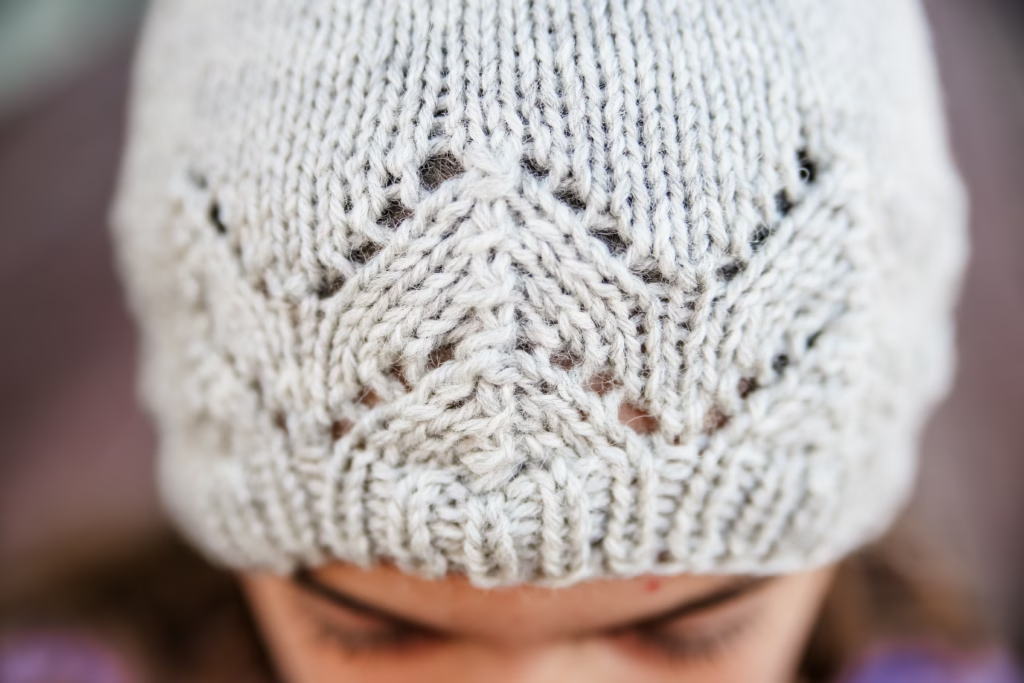
The Sophia Beanie and Everyday Beanie are great opportunities to think about the characteristics you want from a hat yarn. Wool can give you warmth and bounce, while a soft acrylic can make an easy-care hat you can reach for again and again.
For garments like the Youth Damask Cardigan and Youth Cedar Sweater, think carefully about who will wear the sweater and how frequently it will need to be washed. That can quickly help you decide whether wool, acrylic, or a blend makes the most sense.
If you are still deciding between the two fibers, browse my Best Wool Yarn Roundup and Best Acrylic Yarn Roundup next. Comparing specific yarns can make the decision much easier once you know which characteristics matter most for your project.
And remember, there is no single winner in the wool vs acrylic yarn debate. Wool may be the perfect choice for one project, while acrylic could be exactly what you need for the next.

Which one do you reach for most often: wool or acrylic? And does your answer change depending on what you are knitting? Tell me in the comments—I would love to hear what you use and why!
This post may contain affiliate links. If you purchase something through one of these links, I may earn a small commission at no additional cost to you.
Hello, Amanda! I appreciate your in depth article on wool and acrylic yarns. I use wool for adult hats if they’re not allergic and some kids as well. Sweaters and tops are also a favorite of mine to knit with wool. Acrylic yarn is always the fiber I use for blankets (especially baby blankets), children’s sweaters, and some hats. I’ve knit shawls and cowls with both fibers it all depends on the stitch pattern. Lace shawls and the like are always knit in wool. More solid stitch patterns like cables and twists I will use acrylic for.
Thank you again for the great article!